


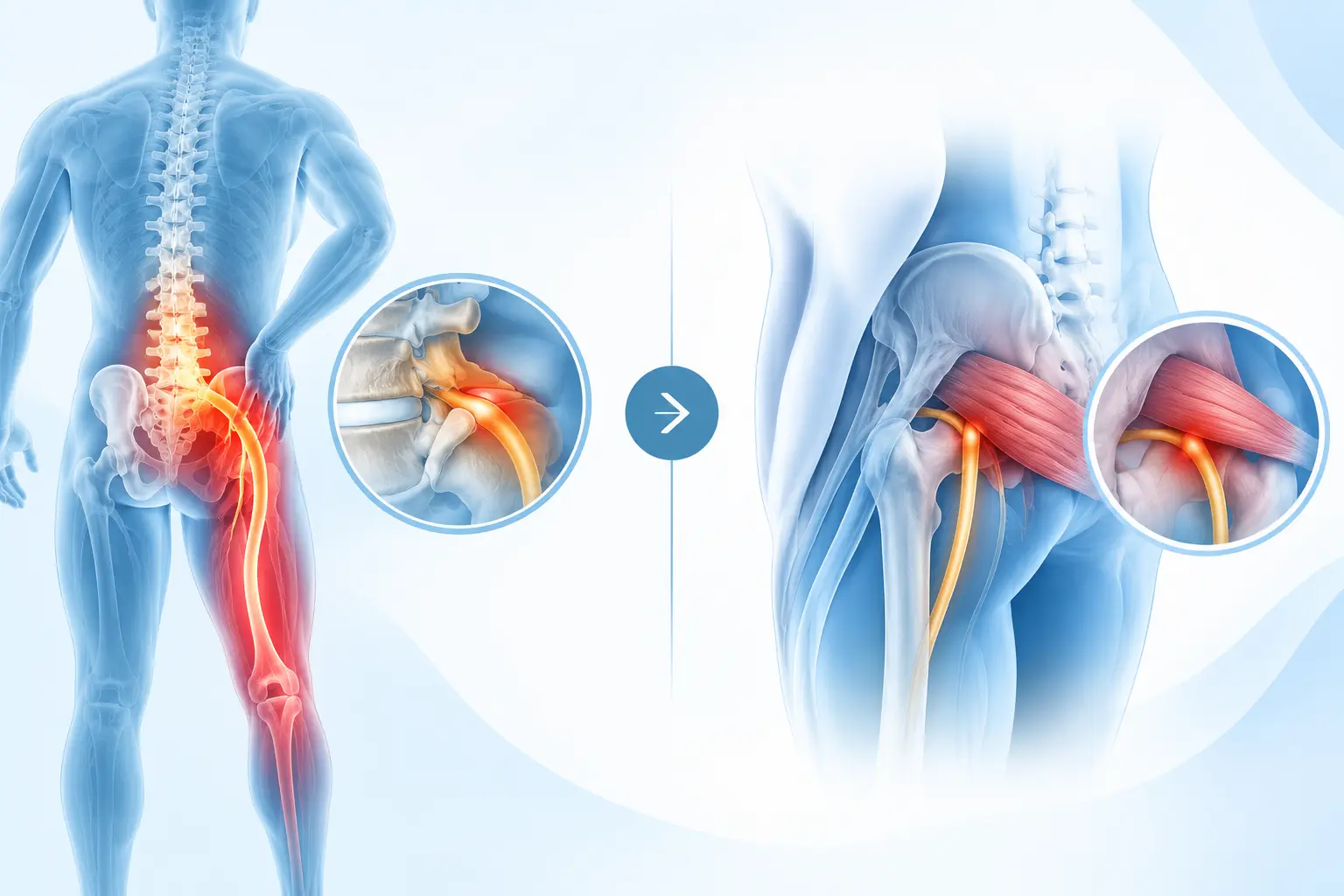
Sciatica vs piriformis syndrome is one of the most common mix-ups people face when pain shoots from the lower back, hip, or buttock into the leg. Both conditions feel almost identical on the surface, yet they start in completely different parts of the body. Understanding sciatica vs piriformis syndrome is the first step toward getting the right treatment instead of guessing.
The team at Edamanasserry Spine Hospital sees this confusion often, and this article breaks down sciatica vs piriformis syndrome so you can recognize which one matches your symptoms.
Sciatica: A Nerve Problem That Starts in the Spine
Sciatica occurs when the sciatic nerve, the longest nerve in the body, becomes compressed somewhere along its path from the lower spine to the leg, and this is the starting point for understanding the Sciatica vs Piriformis Syndrome confusion that trips up so many patients. Sciatica itself is not a standalone condition but a symptom of an underlying problem, which is exactly why the Sciatica vs Piriformis Syndrome comparison matters so much for getting the right diagnosis. Common triggers of true sciatica include a herniated disc, spinal stenosis, or a slipped vertebra pressing on a nerve root, all of which originate in the spine itself. Because the problem starts there, sciatica pain typically begins in the lower back and travels down one leg, often past the knee, frequently accompanied by numbness, tingling, or a burning sensation that worsens with sitting or sudden movement.
Piriformis syndrome, on the other hand, does not originate in the spine at all. It happens when the piriformis muscle, located deep in the buttock near the sciatic nerve, becomes tight or inflamed and compresses the nerve directly, which is the core distinction at the heart of the Sciatica vs Piriformis Syndrome question clinicians must answer. Unlike spinal-origin sciatica, piriformis pain often starts in the buttock itself, worsens with hip rotation or prolonged sitting, and typically shows normal results on spinal imaging since the compression happens outside the spine.
Because the two conditions overlap so heavily, self-diagnosis is unreliable, and this is one more reason the Sciatica vs Piriformis Syndrome debate keeps coming up in doctor’s offices. A proper exam using tests like the straight leg raise or FAIR test, combined with imaging, is the only reliable way to identify the true source of nerve compression before starting treatment.
Piriformis Syndrome: A Muscle Problem That Mimics Nerve Pain
Piriformis syndrome is the other side of the sciatica vs piriformis syndrome equation. The piriformis is a small muscle deep in the buttock that helps rotate the hip. In many people, the sciatic nerve passes directly beneath or even through this muscle.
When the piriformis tightens, spasms, or becomes inflamed, it can compress the sciatic nerve in a way that closely resembles true sciatica. This overlap is exactly why the sciatica vs piriformis syndrome question is so hard to answer without a proper exam.
Sciatica vs Piriformis Syndrome: Comparing the Symptoms
Both conditions cause buttock, hip, and leg pain, but the origin point and pattern of pain differ. Comparing sciatica vs piriformis syndrome symptoms side by side makes the distinction clearer, and it connects to the broader picture covered in our post on different types of back pain and what each one means.
Signs That Point to Sciatica
- Pain starts in the lower back before spreading down the leg
- Numbness or tingling that follows a clear path, often past the knee
- Worsens with sitting, coughing, sneezing, or bending forward
- Linked to a disc bulge or spinal narrowing
Signs That Point to Piriformis Syndrome
- Pain is centered in the buttock rather than the back
- Worsens with hip rotation, stairs, or sitting on hard surfaces
- Direct pressure on the buttock reproduces the pain
- Leg pain rarely travels past the knee
- Spinal imaging usually comes back normal
In short, sciatica vs piriformis syndrome often comes down to where the pain begins and what triggers it.
What Causes Each Condition
Sciatica is typically caused by:
- A herniated or slipped disc
- Spinal stenosis
- Degenerative disc disease
- Spondylolisthesis
Piriformis syndrome is typically caused by:
- Prolonged sitting, especially with a wallet in the back pocket
- Repetitive strain from running or cycling
- Direct trauma to the buttock
- Anatomical variation where the nerve runs through the muscle
Recognizing which cause applies to you is central to resolving the sciatica vs piriformis syndrome question correctly.
How the Two Conditions Are Diagnosed
Because symptoms overlap so heavily, a hands-on exam from qualified spine care specialists is far more reliable than guessing. Diagnosing sciatica vs piriformis syndrome typically involves:
- Straight leg raise test — suggests a spinal cause
- FAIR test (hip flexion, adduction, internal rotation) — suggests piriformis involvement
- MRI or X-ray — confirms disc issues; usually normal in piriformis syndrome
- Palpation — tenderness directly on the muscle points away from the spine
Getting the sciatica vs piriformis syndrome diagnosis right prevents wasted time on the wrong treatment plan.
Treatment Approaches
Non-surgical care is the starting point for both conditions. For sciatica linked to a disc problem, treatment focuses on decompressing the nerve root and reducing inflammation, with sciatica treatment costs in Coimbatore varying based on severity and duration.
For piriformis syndrome, treatment shifts toward releasing the tight muscle through massage, heat therapy, and stretching. Options such as Ayurvedic treatment for sciatica nerve pain in Coimbatore are adapted depending on whether the root cause is spinal or muscular — a key part of resolving sciatica vs piriformis syndrome long-term.
Simple Self-Care Steps
- Avoid sitting longer than 30 minutes without moving
- Skip sitting with a wallet in your back pocket
- Alternate heat and cold packs
- Stretch the hip and lower back gently
- Sleep with a pillow between your knees
When to See a Specialist
- Numbness or weakness that is worsening
- Loss of bladder or bowel control (emergency)
- Pain lasting more than two weeks
- Pain after a sudden fall or injury
Frequently Asked Questions
1. Can someone have both conditions together?
Yes. A tight piriformis can develop as a secondary reaction to ongoing sciatica, which makes the sciatica vs piriformis syndrome distinction even more important to clarify with a proper exam.
2. Will an MRI catch piriformis syndrome?
Usually not directly. MRIs detect disc problems well, but piriformis syndrome is typically confirmed through physical exam rather than imaging.
3. Which is diagnosed more often?
Disc-related sciatica is diagnosed more frequently, but piriformis syndrome is widely considered under-diagnosed due to overlapping symptoms.
4. Is surgery needed for piriformis syndrome?
Rarely. Most cases respond well to muscle release therapy and stretching.
5. How long does recovery take?
Mild cases often improve within two to six weeks; chronic cases may need several months.
Get the Right Diagnosis, Not a Guess
Understanding sciatica vs piriformis syndrome is the difference between guessing at home remedies and getting a treatment plan that actually works. If your buttock, hip, or leg pain won’t go away, a proper clinical evaluation is the fastest way to know exactly what you’re dealing with.
Book a Consultation Today → Book an Appointment
Edamanasserry Spine Hospital Pvt Ltd
129/1, Mettupalayam Rd, Surya Nagar, Narasimhanaickenpalayam, Coimbatore, Tamil Nadu 641031
Phone: +91 9087015559