


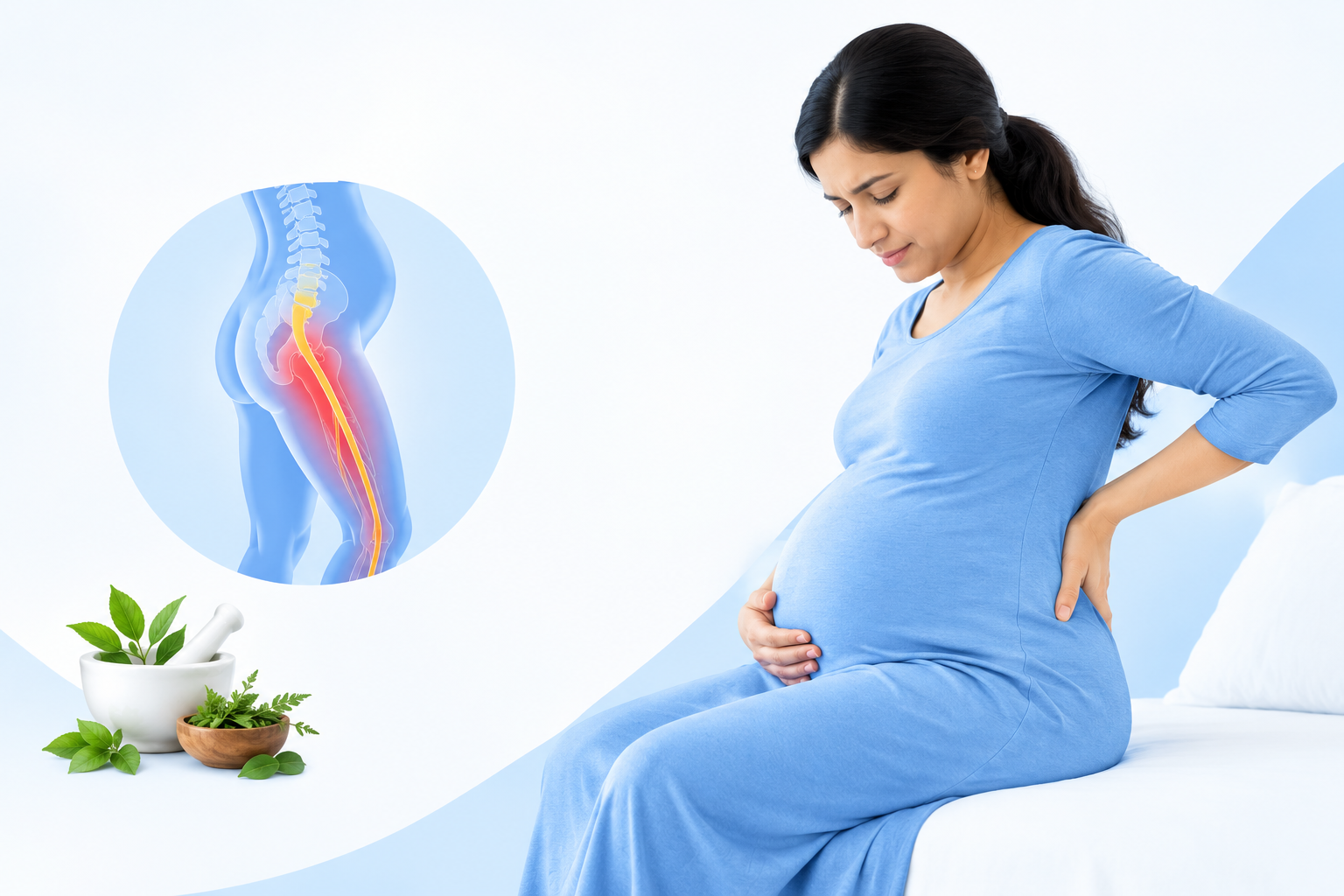
Sciatica during pregnancy Ayurvedic safe treatment is a search many expecting mothers turn to when back and leg pain becomes hard to manage without medication. Pregnancy places new pressure on the lower spine and pelvis, and for some women, this triggers sciatica-like pain that radiates from the lower back down through the hip and leg.
If you’re pregnant and dealing with this kind of pain, you’re likely looking for sciatica during pregnancy Ayurvedic safe treatment options that are gentle, non-pharmaceutical, and genuinely safe for both you and your baby. This guide explains what causes sciatica during pregnancy, what Ayurveda can safely offer, and — just as importantly — what to avoid and discuss with your doctor first.
A note before we begin: pregnancy is a medically sensitive period, and no treatment — Ayurvedic or otherwise — should be started without your obstetrician’s knowledge and a qualified practitioner’s guidance. This article is educational, not a substitute for personalized medical advice.
Why Sciatica Happens During Pregnancy
Sciatic pain during pregnancy usually stems from a combination of physical changes:
- Weight and posture shifts that increase pressure on the lower spine
- The growing uterus pressing on nearby nerves, including the sciatic nerve
- Hormonal changes (like relaxin) that loosen ligaments and joints, sometimes destabilizing the pelvis and lower back
- Muscle imbalances as the body compensates for a shifting center of gravity
This differs from sciatica caused by a disc issue in non-pregnant patients, which is why sciatica during pregnancy Ayurvedic safe treatment approaches also need to differ from standard sciatica care.
Recognizing Pregnancy-Related Sciatica
Common signs include:
- Pain radiating from the lower back through the buttock and down one leg
- Tingling, numbness, or a burning sensation along the leg
- Pain that worsens with prolonged sitting, standing, or specific movements
- Discomfort that may ease when lying on the opposite side
If pain is severe, sudden, or accompanied by leg weakness, contact your doctor promptly rather than waiting — some symptoms need urgent medical evaluation regardless of pregnancy status.
What Makes Treatment During Pregnancy Different
This is the most important section to understand. Sciatica during pregnancy Ayurvedic safe treatment approaches must work within strict safety boundaries that don’t apply outside pregnancy:
- Many internal herbal formulations that are otherwise considered safe are not recommended during pregnancy, since their effects on a developing baby aren’t always well studied
- Certain massage techniques, pressure points, and therapy positions are avoided, particularly in the first trimester
- Any heat-based or oil-based therapy must be adapted in intensity, duration, and technique
- Treatment must always be coordinated with your obstetrician, not pursued independently
Because of this, any specific sciatica during pregnancy Ayurvedic safe treatment plan must be personally assessed and prescribed by a qualified Ayurvedic physician working alongside your OB-GYN — this article cannot and should not substitute for that individualized medical judgment.
Generally Considered Safer, Gentle Approaches (With Medical Guidance)
With that caveat firmly in place, here are categories of care commonly discussed as gentler options during pregnancy — always to be confirmed with your doctor and a qualified practitioner before starting:
1. Gentle External Therapies
Light, pregnancy-adapted external oil application (never involving the abdomen) is sometimes used to ease muscular tension in the lower back and hips, performed only by a practitioner trained specifically in prenatal care.
2. Posture and Movement Guidance
Simple postural adjustments — how you sit, stand, and sleep — can meaningfully reduce nerve pressure. Using a supportive pillow between the knees while sleeping on your side, for example, is commonly recommended.
3. Gentle, Doctor-Approved Movement
Light walking and pregnancy-safe stretching, when cleared by your doctor, can help relieve pressure on the sciatic nerve without straining the body.
4. Warm (Not Hot) Compresses
Mild warmth applied to the lower back — never excessive heat — is sometimes used to ease muscular discomfort, though this should also be confirmed as appropriate for your specific pregnancy stage.
5. Rest and Positioning
Avoiding prolonged standing or sitting, and changing positions frequently, can reduce the cumulative pressure that worsens sciatic pain over the course of the day.
What to Avoid During Pregnancy
Just as important as what’s safe is understanding what isn’t appropriate. A responsible sciatica during pregnancy Ayurvedic safe treatment approach excludes:
- Any internal Ayurvedic medication not specifically cleared for pregnancy by a qualified physician
- Deep tissue massage or strong pressure-point therapy, especially near the lower back and abdomen
- Panchakarma detox procedures, which are generally not recommended during pregnancy
- Any therapy involving fasting, strong herbal purgatives, or intense heat treatments
- Self-administered remedies based on general (non-pregnancy-specific) sciatica advice
If you’ve read general content about sciatica treatment, note that pregnancy changes the safety calculus significantly — approaches appropriate for non-pregnant patients are often unsuitable here.
Why Professional Evaluation Matters More During Pregnancy
Because sciatica-like pain during pregnancy can sometimes overlap with other conditions — including pelvic girdle pain, round ligament pain, or in rare cases more serious concerns — a proper evaluation matters more than during typical sciatica. A qualified specialist can help distinguish between these conditions and recommend an approach genuinely suited to your stage of pregnancy.
Talking to Your Doctor and Practitioner
Before starting any sciatica during pregnancy Ayurvedic safe treatment, prepare to discuss:
- How far along you are in your pregnancy
- Any pregnancy complications or high-risk factors
- The exact location, intensity, and pattern of your pain
- Any medications or supplements you’re currently taking
- Your obstetrician’s clearance for physical therapies
This collaborative approach — combining your OB-GYN’s oversight with a qualified Ayurvedic practitioner’s guidance — is the safest path forward, rather than pursuing either in isolation.
Quick Summary: Sciatica During Pregnancy and Ayurvedic Care
- Sciatica during pregnancy often results from postural shifts, hormonal changes, and pressure from the growing uterus
- Not all standard Ayurvedic sciatica treatments are appropriate during pregnancy
- Gentle external therapy, posture correction, and doctor-approved movement are generally safer starting points
- Internal medications, deep massage, and detox procedures are typically avoided during pregnancy
- Always involve both your obstetrician and a qualified Ayurvedic physician before starting treatment
Managing sciatica during pregnancy Ayurvedic safe treatment responsibly means prioritizing safety first — for both you and your baby — with professional guidance shaping every step.
Frequently Asked Questions
Is Ayurvedic treatment generally safe during pregnancy? Some gentle, externally applied Ayurvedic approaches may be appropriate during pregnancy, but this must always be confirmed by a qualified practitioner working alongside your obstetrician, since many standard Ayurvedic therapies are not recommended during pregnancy.
When does sciatica typically start during pregnancy? It commonly develops in the second or third trimester as weight increases and the growing uterus places more pressure on nearby nerves, though timing varies between individuals.
Should I see my OB-GYN or an Ayurvedic doctor first for pregnancy sciatica? Start with your obstetrician to rule out other causes and get medical clearance, then consult a qualified Ayurvedic practitioner experienced specifically in prenatal care for any additional supportive therapy.
Can sciatica during pregnancy harm the baby? Sciatica itself is a nerve pain condition and does not directly harm the baby, but persistent, severe pain should still be evaluated by your doctor to rule out other contributing issues.
Does sciatica pain from pregnancy go away after delivery? For many women, pregnancy-related sciatica improves significantly after delivery as pressure on the nerve reduces, though recovery time varies and some women benefit from continued gentle care afterward.
Looking for safe, personalized guidance for sciatica during pregnancy? Our Ayurvedic specialists work collaboratively with your medical care to offer gentle, pregnancy-appropriate support. Visit the homepage or learn more about our gynaecology department.
Book a Consultation Today → Book an Appointment
📍 Edamanasserry Spine Hospital, Coimbatore, Tamil Nadu 📞 +91 9087015559