


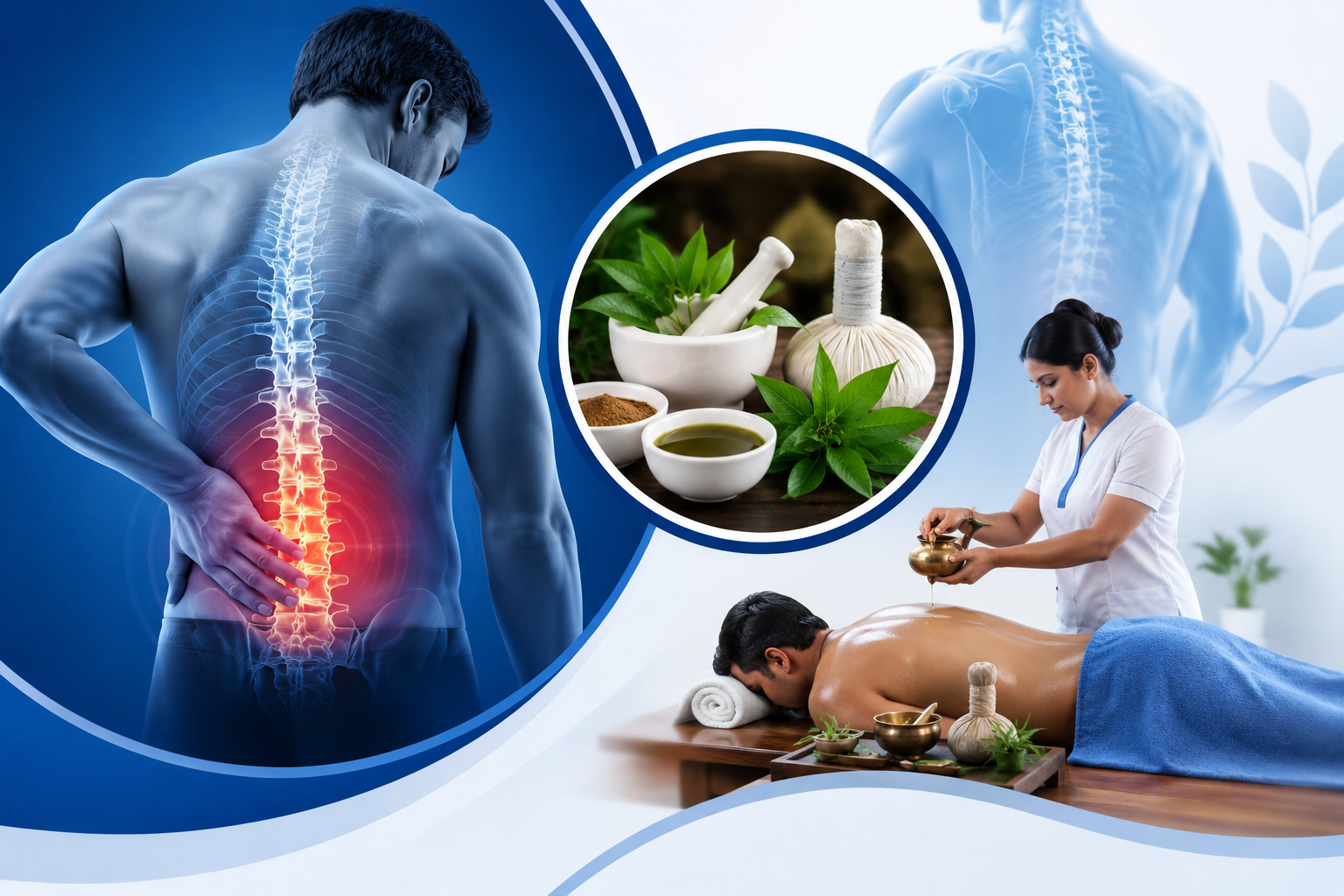
If your lower back has been speaking to you in the language of aches, stiffness, and radiating pain — it is time you listened. Lumbar spondylosis is one of the most common yet most misunderstood spinal conditions in India, affecting millions of adults, particularly those above 40.
The good news? You do not have to choose between living with the pain and going under the knife.
Lumbar spondylosis Ayurvedic treatment in Coimbatore at E-Spine Hospital offers a time-tested, evidence-informed, non-surgical path to lasting spinal relief — rooted in Kerala’s classical Ayurvedic traditions and refined over generations.
This guide covers everything you need to know about lumbar spondylosis, how Ayurveda understands and treats it, and why E-Spine Hospital in Coimbatore is the most trusted destination for spine care in Tamil Nadu.
What Is Lumbar Spondylosis? Understanding the Condition
Lumbar spondylosis refers to age-related degeneration of the vertebrae, intervertebral discs, and facet joints in the lower back (lumbar spine). It is not a single disease but an umbrella term for degenerative changes that develop over years of mechanical stress, poor posture, and natural aging.
Common symptoms include:
- Dull or sharp pain in the lower back
- Morning stiffness that eases with movement
- Radiating pain down the legs (similar to sciatica)
- Numbness or tingling in the feet
- Muscle weakness in the lower limbs
- Worsening pain after prolonged sitting or standing
Left unaddressed, spinal degeneration can compress nerve roots, narrow the spinal canal (spinal stenosis), or lead to spondylolisthesis — a condition where one vertebra slips over another.
How Ayurveda Explains Lumbar Spondylosis: The Katigraha Connection
In classical Ayurvedic texts, lumbar spondylosis is closely correlated with Katigraha — a condition marked by stiffness and pain in the kati (lumbosacral) region. When the condition progresses to radiating nerve pain, it overlaps with Gridhrasi (Ayurvedic sciatica).
Both conditions arise primarily from aggravated Vata dosha, the biological force that governs movement, nerve function, and musculoskeletal integrity. When Vata is disturbed — through poor diet, stress, sedentary habits, or aging — it depletes the Asthi dhatu (bone tissue) and Majja dhatu (nerve tissue), leading to the degeneration seen in lumbar spondylosis.
This Ayurvedic framework is not just philosophical — it directly informs the treatment approach. By targeting Vata dosha spine treatment at its root, Ayurveda offers healing rather than symptom suppression.
Katigraha Ayurvedic treatment in Coimbatore at E-Spine Hospital addresses this root Vata imbalance through personalized therapies tailored to your body constitution (Prakriti), severity, and age.
Why Choose Ayurvedic Spine Care Over Conventional Treatment?
Conventional medicine offers NSAIDs, corticosteroid injections, physiotherapy, and surgery for lumbar spondylosis. While these have their place in acute or severe cases, they come with limitations:
- Painkillers provide temporary relief without treating the cause
- Long-term NSAID use carries gastrointestinal and cardiovascular risks
- Surgery has significant recovery time and potential complications
- Post-surgical chronic pain is a recognized clinical problem
Non-surgical lumbar spondylosis treatment in Coimbatore through Ayurveda works differently. Rather than blocking pain signals or surgically altering spinal anatomy, it:
- Repairs and nourishes deteriorating disc and bone tissue
- Reduces inflammation at the nerve root level
- Strengthens the paraspinal muscles that support the spine
- Balances the Vata dosha driving the degenerative process
- Prevents further progression through diet and lifestyle
Patients who opt for Ayurvedic spine care often report not just pain relief but improved sleep, energy, digestion, and emotional wellbeing — because Ayurveda treats the whole person.
Lumbar Spondylosis Ayurvedic Treatment in Coimbatore: What E-Spine Hospital Offers
E-Spine Hospital (ESH) is a NABH-accredited, AYUSH-certified Ayurvedic spine hospital in Coimbatore, Tamil Nadu. The hospital’s unique treatment protocols were developed by the Edamanasserry family from the Malabar region of Kerala — a lineage of Ayurvedic practitioners who have refined spine-specific therapies over centuries.
Here is a detailed look at the core treatments offered for lumbar spondylosis Ayurvedic treatment in Coimbatore:
Kati Basti — The Gold Standard for Lumbar Spondylosis
Kati Basti treatment for lumbar spondylosis in Coimbatore is the most widely recognized and clinically validated Ayurvedic therapy for lower back conditions.
In this procedure, warm medicated oil is retained on the lumbar region within a boundary made of black gram dough. The oil — selected specifically for your condition — penetrates deep into the tissue layers.
Benefits of Kati Basti:
- Provides immediate relief from lumbar pain and stiffness
- Improves circulation to the intervertebral disc
- Lubricates facet joints and reduces friction
- Nourishes the ligaments and paraspinal muscles
- Reduces nerve root inflammation
Kati Basti is typically administered daily for 7–21 days depending on the severity of degeneration. It is often the most transformative therapy patients experience at E-Spine Hospital’s spine treatments page.
Panchakarma for Lumbar Spondylosis in Coimbatore
Panchakarma for lumbar spondylosis in Coimbatore is a systematic detoxification and rejuvenation protocol that works at a deeper constitutional level than any single therapy.
The five core Panchakarma procedures most relevant to lumbar spondylosis are:
1. Snehana (Oleation)
Internal and external oil application to soften and mobilize accumulated Ama (toxins) from tissues. Mahamasha Taila, Sahacharadi Taila, and Bala Taila are commonly used oils at E-Spine.
2. Swedana (Sudation)
Herbal steam therapy that opens channels (Srotas), dilates blood vessels, and prepares tissues to release toxins. Used before and alongside Kati Basti.
3. Vasti (Medicated Enema Therapy)
Considered the most powerful treatment for Vata disorders. Medicated enemas using herbal decoctions and oils directly regulate Apana Vata — the downward-moving Vata responsible for lumbar region health. Learn more about Vasthi therapy and its neurological benefits on the E-Spine blog.
4. Virechana (Purgation)
Used when Pitta aggravation contributes to inflammation in the disc or nerve root.
5. Abhyanga (Therapeutic Full-Body Massage)
Rhythmic, synchronized oil massage that relaxes tense paraspinal muscles, improves lymphatic drainage, and calms the nervous system. Read E-Spine’s in-depth article on what happens to your spine during Abhyangam for a detailed scientific breakdown.
Kizhi Therapy — Heat and Herbal Healing
Kizhi involves boluses (pouches) filled with herbal powders, leaves, or medicated rice, applied warm to the spine. The three main types — Podikizhi, Elakizhi, and Navarakizhi — each serve a different therapeutic purpose. E-Spine’s detailed Kizhi therapy guide explains which type is right for which condition.
For lumbar spondylosis specifically:
- Elakizhi (herbal leaf bolus) reduces inflammation and nerve compression
- Navarakizhi (medicated rice bolus) nourishes and regenerates spinal tissues
- Podikizhi (herbal powder bolus) breaks down Ama deposits in joints
Pichu Therapy for Lumbar Support
Pichu therapy involves placing a medicated oil-soaked cotton pad over the lumbar spine and allowing it to continuously release healing oils. It is particularly effective for patients with severe disc degeneration or post-surgical spine pain who cannot tolerate the pressure of direct massage.
Internal Herbal Medications
Alongside external therapies, E-Spine Hospital prescribes classical Ayurvedic formulations that support bone density, reduce nerve inflammation, and restore Vata balance from within.
Commonly used preparations include:
- Trayodashanga Guggulu — joint and nerve tonic
- Sahacharadi Kashayam — Vata-pacifying decoction
- Kamdudha Vati — anti-inflammatory and cooling
- Rasna Saptak Kashayam — musculoskeletal support
- Ashwagandha preparations — adaptogenic nerve strength
These are prescribed based on individual Prakriti assessment and are a key pillar of degenerative disc disease Ayurvedic treatment in Tamil Nadu.
Who Should Consider Ayurvedic Treatment for Lumbar Spondylosis?
Lumbar spondylosis Ayurvedic treatment in Coimbatore is particularly suitable for:
- Adults aged 35–65 with chronic lower back pain
- Patients with Grade 1 or Grade 2 lumbar spondylosis on MRI/X-ray
- Individuals who have tried physiotherapy or painkillers without lasting relief
- Those who are medically unfit for surgery or wish to avoid it
- Senior citizens with age-related spinal degeneration and low bone density
- Patients with associated sciatica, disc bulge, or facet joint arthritis
Patients with Grade 3–4 spondylosis or severe neurological compromise (bladder/bowel involvement) are evaluated individually. E-Spine’s team will transparently advise if a case requires surgical referral — because the goal is your health, not just a treatment admission.
Your Treatment Journey at E-Spine Hospital, Coimbatore
Understanding what to expect reduces anxiety and improves treatment compliance. Here is the typical patient journey:
Step 1 — Consultation and Ayurvedic Diagnosis
Your first visit includes Nadi Pariksha (pulse diagnosis), physical examination, and review of any existing MRI/X-ray reports. Our complete guide to your first visit at an Ayurvedic spine hospital walks you through the process in detail.
Step 2 — Personalized Protocol Design
Based on your diagnosis, body constitution, lifestyle, and severity, a treatment plan is created — typically spanning 14 to 28 days for chronic conditions.
Step 3 — Active Treatment Phase
Daily therapy sessions combining Kati Basti, Panchakarma procedures, Kizhi, and internal medications. Progress is monitored and protocols adjusted weekly.
Step 4 — Diet and Lifestyle Counseling
The Ayurvedic anti-inflammatory diet guide for Coimbatore residents is integrated into your recovery plan — including locally available foods that pacify Vata and support bone health.
Step 5 — Post-Treatment Home Care
Discharge includes written home care protocols, yoga and stretching exercises, dietary recommendations, and follow-up scheduling.
Lumbar Spondylosis and Lifestyle: What You Must Stop Doing Right Now
Even the best Ayurvedic spine hospital in Coimbatore cannot undo the damage caused by ongoing poor habits. Your recovery depends equally on what you stop doing.
Habits that worsen lumbar spondylosis:
- Sitting for more than 45 minutes without a standing or walking break
- Sleeping on a mattress that is too soft or too hard
- Lifting heavy objects by bending the waist instead of the knees
- Wearing high heels regularly (disrupts lumbar curvature)
- Ignoring early morning stiffness and waiting for pain to become severe
- Skipping warm-up before exercise
E-Spine’s blog on habits that worsen cervical spondylosis contains parallel insights applicable to lumbar conditions as well.
Diet Recommendations for Lumbar Spondylosis
Ayurveda holds that food is medicine — and in the case of spinal degeneration Ayurvedic treatment in Coimbatore, dietary choices directly influence Vata balance and bone tissue quality.
Foods to include:
- Warm, cooked, lightly spiced meals (avoid raw, cold foods)
- Sesame seeds, ghee, and warm milk (bone-nourishing)
- Fenugreek, turmeric, and ginger (anti-inflammatory)
- Green gram, moong dal, and easy-to-digest grains
- Drumstick (Moringa) — locally abundant in Coimbatore and excellent for Asthi dhatu
Foods to avoid:
- Curd (especially at night) — aggravates Vata and Kapha
- Carbonated drinks and processed foods
- Excessive dry, light, or cold foods
- Nightshades (tomatoes, potatoes, brinjal) in large quantities
FAQs: Lumbar Spondylosis Ayurvedic Treatment in Coimbatore
Q1. How long does Ayurvedic treatment for lumbar spondylosis take to show results?
Most patients begin to notice meaningful pain reduction within 7–10 days of beginning intensive Panchakarma therapy. For chronic cases with significant disc degeneration, a full course of 21–28 days is recommended, followed by a maintenance protocol. Mild to moderate cases often respond within 14 days.
Q2. Can Ayurvedic treatment completely cure lumbar spondylosis?
Lumbar spondylosis involves structural changes to the spine that cannot be fully reversed by any system of medicine. However, non-surgical lumbar spondylosis treatment in Coimbatore through Ayurveda can significantly reduce pain, improve mobility, slow disease progression, and in many cases eliminate the need for surgery. The goal is functional recovery and quality of life — not a false promise of cure.
Q3. Is Kati Basti painful? What does it feel like?
No, Kati Basti is not painful. Most patients find it deeply relaxing. The warm medicated oil creates a soothing heat sensation in the lumbar region. Some patients experience a gentle pulling sensation as stiffness begins to release. It is one of the most comfortable Ayurvedic therapies available.
Q4. Can elderly patients with osteoporosis undergo Ayurvedic spine treatment?
Yes, with appropriate modifications. Chronic low back pain specialist in Coimbatore doctors at E-Spine assess bone density and tailor therapy intensity accordingly. Gentle Abhyanga, Pichu, and internal Rasayana medications are particularly safe and beneficial for elderly patients. Vasti therapy is often prescribed to nourish Asthi dhatu (bone tissue) directly.
Q5. Is E-Spine Hospital in Coimbatore NABH-accredited?
Yes. E-Spine Hospital Coimbatore spine care operates under NABH accreditation and AYUSH certification, ensuring your treatment meets national quality and safety standards. The hospital follows evidence-based documentation of patient outcomes and maintains clinical records for all cases.
Why E-Spine Hospital Is Coimbatore’s Most Trusted Ayurvedic Spine Centre
E-Spine Hospital is not a general Ayurvedic clinic that also treats spine cases. It is a dedicated Ayurvedic spine hospital in Coimbatore — every doctor, therapist, and protocol is spine-specific.
What sets E-Spine apart:
- Generational Ayurvedic expertise from the Edamanasserry family of Kerala
- NABH and AYUSH certified — among very few in Tamil Nadu
- Dedicated Panchakarma wing for spine conditions
- In-house Ayurvedic pharmacy with quality-tested formulations
- Transparent treatment planning with no hidden costs
- 85% patient satisfaction rate for lumbar and disc conditions
- Serving patients from across Coimbatore, Erode, Salem, Tiruppur, and Kerala
Book Your Consultation for Lumbar Spondylosis Ayurvedic Treatment in Coimbatore
Your spine has been carrying you your entire life. It is time to give it the care it deserves.
Whether you are dealing with early-stage lumbar discomfort or have been suffering for years without lasting relief, the team at E-Spine Hospital is ready to assess your condition and design a treatment plan that works — without surgery, without dependency on painkillers, and without compromise.
📞 Call us: +91 9087015559
📍 E-Spine Hospital, Coimbatore, Tamil Nadu
👉 Book Your Appointment Now and take the first step toward a pain-free spine — the Ayurvedic way.
Explore more from E-Spine Hospital: Ayurvedic Spine Treatments | Departments | Patient Testimonials | About E-Spine