

Recovering from a stroke is often a long and challenging journey that requires patience, consistency, and expert medical support. Post-Stroke Recovery With Ayurveda offers a holistic approach that complements conventional rehabilitation by focusing on restoring strength, improving mobility, enhancing neurological function, and supporting overall well-being.
For patients and caregivers seeking a structured recovery pathway, Ayurveda provides personalized therapies, dietary guidance, and lifestyle modifications that can play a valuable role in rehabilitation. This month-by-month guide explains how Post-Stroke Recovery With Ayurveda may support recovery under professional supervision.
Understanding Stroke and the Need for Rehabilitation
A stroke occurs when blood flow to a part of the brain is interrupted, causing brain cells to become damaged or die. Depending on the severity and location of the stroke, individuals may experience weakness, paralysis, speech difficulties, cognitive challenges, balance issues, and emotional changes.
While emergency medical treatment is critical, long-term rehabilitation is equally important. The goal is to regain independence, improve quality of life, and reduce the risk of future complications.
Post-Stroke Recovery With Ayurveda focuses on balancing the body’s systems, improving circulation, nourishing weakened tissues, and supporting neurological recovery alongside prescribed medical care.
Why Ayurveda Is Considered for Stroke Recovery
According to Ayurveda, stroke-related conditions are often associated with an imbalance of Vata Dosha, which governs movement, nerve function, and communication within the body.
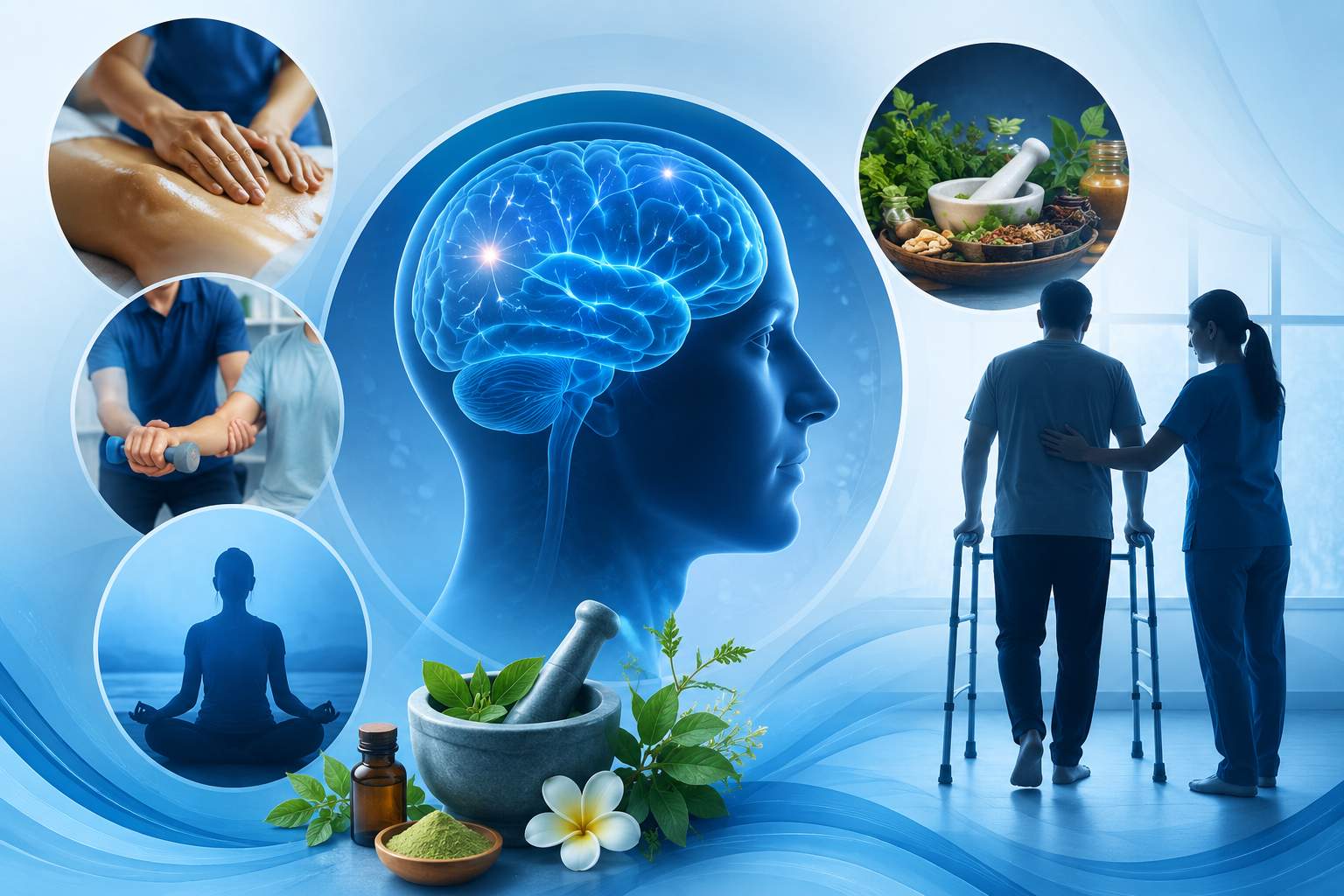
An individualized recovery plan may include:
- Herbal therapies
- Therapeutic oil applications
- Panchakarma procedures
- Specialized massage techniques
- Dietary recommendations
- Lifestyle modifications
- Guided physical rehabilitation
Many patients explore Ayurvedic Rehabilitation After Stroke as a complementary approach to enhance their recovery journey.
Month 1: Stabilization and Initial Recovery
Focus Areas
- Medical stabilization
- Prevention of complications
- Gentle physical movement
- Emotional support
The first month after a stroke is crucial. During this phase, the primary focus remains on medical supervision, monitoring vital functions, and preventing secondary complications.
Ayurvedic practitioners may recommend gentle therapies designed to support circulation and reduce muscular stiffness once the patient’s condition is stable. Light oil applications and carefully supervised rehabilitation exercises may be introduced.
Nutritional support is equally important. Easily digestible foods, adequate hydration, and balanced meals help support recovery.
This early stage forms the foundation for successful Post-Stroke Recovery With Ayurveda.
Month 2: Improving Mobility and Muscle Function
Focus Areas
- Muscle activation
- Joint flexibility
- Improved circulation
- Assisted movement training
As rehabilitation progresses, patients often begin structured physical therapy programs.
Ayurvedic therapies such as Abhyanga (therapeutic oil massage) may help improve circulation and reduce muscle stiffness. These therapies are often integrated with physiotherapy to encourage gradual movement and functional recovery.
At this stage, Stroke Recovery Treatment in Ayurveda may also include individualized herbal support prescribed by qualified practitioners.
Regular mobility exercises remain essential to rebuilding strength and preventing muscle wasting.
Month 3: Strength Building and Coordination
Focus Areas
- Balance training
- Strength enhancement
- Improved coordination
- Increased independence
During the third month, many patients start showing measurable improvements in movement and coordination.
Specialized Ayurvedic therapies may be adjusted based on individual progress. Rehabilitation programs often focus on improving gait, posture, and limb control.
Patients undergoing Ayurvedic Rehabilitation After Stroke may benefit from therapies designed to enhance neuromuscular function while supporting overall vitality.
Family involvement becomes increasingly important during this phase, helping patients maintain consistency with therapy schedules and lifestyle recommendations.
Month 4: Speech and Cognitive Recovery
Focus Areas
- Speech improvement
- Memory enhancement
- Cognitive rehabilitation
- Emotional wellness
Many stroke survivors experience communication challenges, memory difficulties, or emotional changes.
A comprehensive rehabilitation program may include:
- Speech therapy
- Cognitive exercises
- Stress management techniques
- Mind-body practices
Ayurveda emphasizes a holistic approach that addresses both physical and mental well-being. Techniques that promote relaxation and mental clarity may support the overall recovery process.
This stage represents a significant milestone in Post-Stroke Recovery With Ayurveda, as patients work toward regaining confidence and daily functioning.
Month 5: Restoring Daily Independence
Focus Areas
- Self-care activities
- Household mobility
- Functional strength
- Confidence building
By the fifth month, rehabilitation often shifts toward restoring independence in daily activities.
Patients may focus on:
- Walking longer distances
- Dressing independently
- Performing household tasks
- Improving hand function
During this phase, Stroke Recovery Treatment in Ayurveda may continue alongside physiotherapy and occupational therapy to maximize functional recovery.
Maintaining a nutritious diet, proper sleep schedule, and stress-free lifestyle becomes increasingly important for sustained progress.
Month 6 and Beyond: Long-Term Recovery and Prevention
Focus Areas
- Relapse prevention
- Long-term wellness
- Cardiovascular health
- Continued rehabilitation
Stroke recovery does not end after six months. Many individuals continue improving for months or even years with consistent rehabilitation.
Long-term care typically includes:
- Regular medical follow-ups
- Ongoing physical activity
- Healthy dietary habits
- Stress management
- Monitoring risk factors such as hypertension and diabetes
Many patients continue Ayurvedic Rehabilitation After Stroke as part of their long-term wellness strategy to support mobility, circulation, and overall quality of life.
Common Ayurvedic Therapies Used in Stroke Rehabilitation
Depending on individual needs and medical suitability, practitioners may recommend:
Abhyanga
A therapeutic oil massage that may support circulation and muscle relaxation.
Pizhichil
A specialized therapy involving warm medicated oils applied to the body.
Navarakizhi
A treatment using herbal rice boluses to promote strength and nourishment.
Panchakarma-Based Therapies
Selected detoxification and rejuvenation procedures may be recommended when appropriate.
These therapies should always be performed under the supervision of qualified Ayurvedic professionals.
Diet and Lifestyle Recommendations
A supportive recovery plan often includes:
- Fresh, nutrient-rich foods
- Adequate hydration
- Regular sleep patterns
- Gentle exercise
- Stress reduction techniques
- Avoidance of smoking and excessive alcohol consumption
Lifestyle consistency plays a major role in successful Post-Stroke Recovery With Ayurveda.
Frequently Asked Questions
Can Ayurveda cure stroke completely?
Ayurveda does not replace emergency stroke treatment. However, it may support rehabilitation and recovery when integrated with conventional medical care.
When can Ayurvedic therapies begin after a stroke?
Therapies should only begin after medical stabilization and under the guidance of qualified healthcare professionals.
Is Ayurvedic treatment safe for stroke patients?
When supervised by experienced practitioners and coordinated with medical specialists, Ayurvedic therapies may be incorporated into a comprehensive rehabilitation plan.
Conclusion
Post-Stroke Recovery With Ayurveda offers a holistic rehabilitation approach that focuses on restoring physical function, supporting neurological recovery, and enhancing overall well-being. By combining Ayurvedic therapies with modern medical care, physiotherapy, speech therapy, and lifestyle management, patients may improve their chances of achieving meaningful recovery and long-term independence.
Every stroke survivor’s journey is unique, making personalized care and professional guidance essential for achieving the best possible outcomes.
Contact for Expert Consultation
If you or a loved one is seeking comprehensive rehabilitation support, connect with the specialists at E-Spine Hospital.
📞 Call: +91 6238 900 800
🌐 Website: https://e-spinehospital.com/
Book a consultation today and learn how an integrated rehabilitation approach can support your stroke recovery journey.