


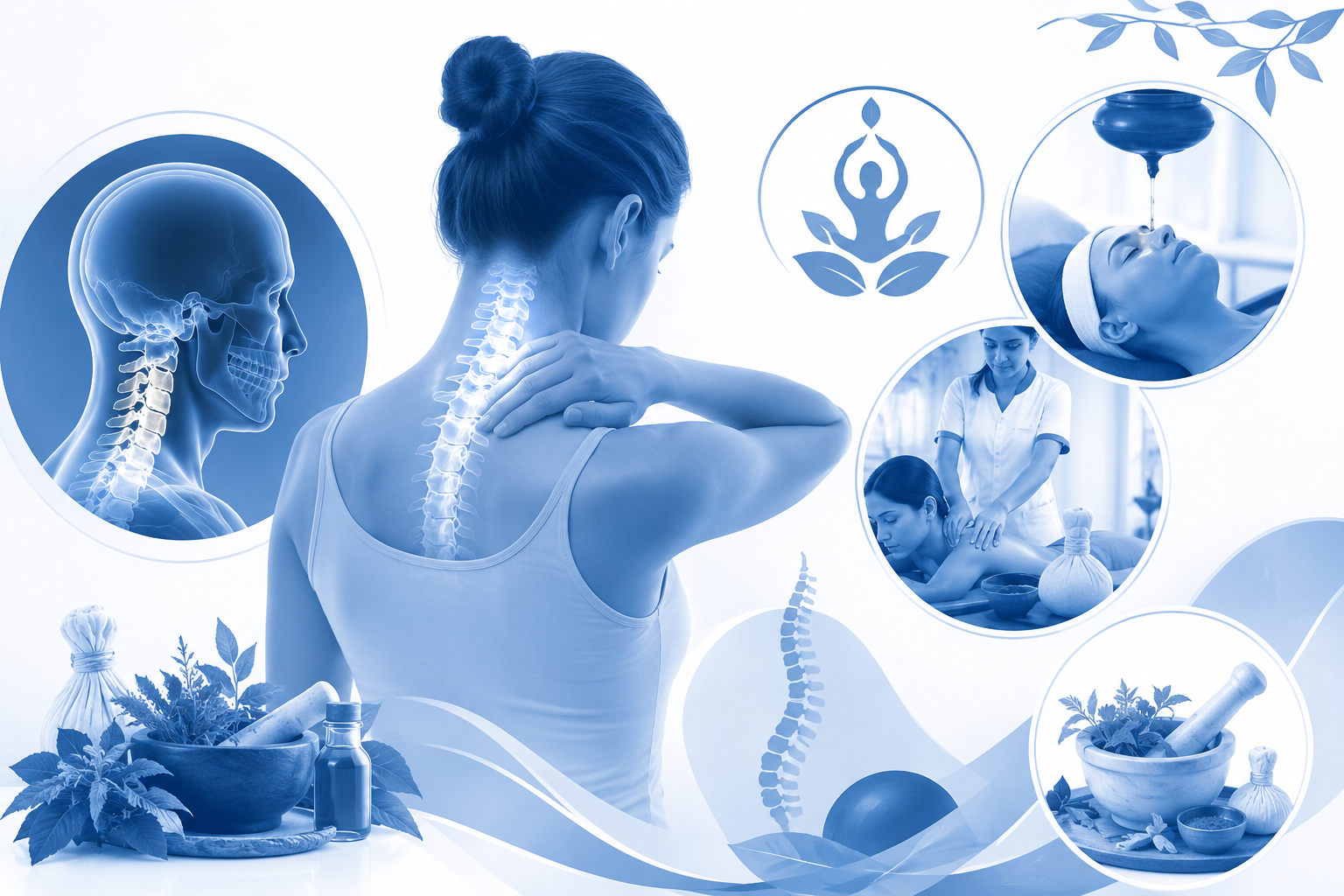
Your neck has been hurting for months. You wake up stiff every morning. Your arms tingle during long work hours. A scan confirmed cervical spondylosis — and now someone has mentioned surgery.
Before you go down that path, here is what you need to know.
Cervical spondylosis treatment in Coimbatore without surgery is not only possible — for the vast majority of patients, it is the smarter, safer, and more effective long-term choice. At E-Spine Hospital, Coimbatore, thousands of patients with mild to moderate cervical spondylosis have found lasting relief through Ayurvedic therapies, physiotherapy, yoga, and evidence-backed conservative management — without a single surgical incision.
This guide explains everything: what cervical spondylosis actually is, why surgery is often not the first answer, and what a complete non-surgical treatment pathway looks like for patients in Tamil Nadu.
What Is Cervical Spondylosis and Why Is It So Common in Coimbatore?
Cervical spondylosis is the gradual wear and tear of the bones, discs, and joints in the cervical spine — the seven vertebrae that make up your neck. It is one of the most common age-related spine conditions in India, affecting an estimated 85% of people over the age of 60. But it is increasingly being diagnosed in people in their 30s and 40s — particularly IT professionals, desk workers, and those who spend long hours looking at screens.
In Coimbatore, one of Tamil Nadu’s largest commercial and industrial cities, the combination of high-tech sector employment, long desk hours, poor ergonomic setups, and limited physical activity has made cervical spondylosis a near-epidemic condition among working-age adults.
From an Ayurvedic perspective, cervical spondylosis maps closely to a condition called Greeva Sandhigata Vata — a vitiation of Vata dosha that leads to degeneration, dryness, and inflammation in the cervical joints and surrounding soft tissues.
Symptoms of Cervical Spondylosis You Should Not Ignore
Cervical spondylosis symptoms vary from mild stiffness to significant nerve compression. Recognising them early is critical to avoiding progression.
Common symptoms include:
Persistent or recurring neck pain that worsens with movement. Morning stiffness that takes 30 minutes or more to ease. Headaches originating at the base of the skull. Tingling, numbness, or a pins-and-needles sensation radiating into the shoulders, arms, or fingers. Muscle weakness in the arms or hands. Difficulty turning the head fully from side to side. In advanced cases — loss of balance, difficulty walking, or bladder dysfunction (which requires urgent evaluation).
If you are experiencing any of these symptoms, do not wait. An early diagnosis through clinical examination and MRI imaging dramatically improves the effectiveness of non-surgical cervical spondylosis treatment in Coimbatore.
Why Surgery Is Often Not the First Answer
When patients in Tamil Nadu are told they have cervical spondylosis, the fear of surgery is often the first emotional response. But here is the clinical reality:
The majority of cervical spondylosis cases — classified as mild to moderate — do not require surgery. Surgery for cervical spondylosis is typically reserved for cases involving cervical myelopathy (spinal cord compression causing neurological deficits), progressive weakness or paralysis, or severe pain that has not responded to six or more months of conservative treatment.
For everyone else, non-surgical cervical spondylosis management is both appropriate and highly effective when delivered through a structured, multi-modal treatment programme. Research consistently shows that conservative treatment delivers outcomes comparable to surgical intervention for most cervical spondylosis patients — with significantly lower risk, faster return to daily life, and no post-surgical complications.
This is the foundation of the approach at our Spine Department at E-Spine Hospital: treat the root cause of degeneration, restore function, relieve pain, and build resilience — without putting the patient at surgical risk.
Cervical Spondylosis Treatment in Coimbatore Without Surgery: The Complete E-Spine Approach
At E-Spine Hospital, cervical spondylosis treatment without surgery is not a single therapy — it is a carefully sequenced, personalised programme that addresses the patient’s specific stage of degeneration, dosha profile, lifestyle factors, and clinical symptoms.
Here is what that programme includes.
Ayurvedic Therapies for Cervical Spondylosis
Ayurveda has been treating Greeva Sandhigata Vata — cervical joint degeneration — for over three thousand years. The therapies developed by the Edamanasserry family, passed down through generations and refined over five decades of clinical practice, are central to how E-Spine Hospital approaches cervical spondylosis treatment in Coimbatore without surgery.
Greeva Vasti (Neck Oil Pooling)
Greeva Vasti is one of the most effective Ayurvedic treatments for cervical spondylosis. A dam made of black gram flour is placed around the neck, and warm medicated oil is pooled and retained in this reservoir for a specified duration. The oil penetrates deeply into the cervical tissues, lubricating the joints, reducing inflammation, and nourishing the intervertebral discs. This therapy directly targets the Vata vitiation responsible for degeneration and is particularly effective for patients with disc desiccation and foraminal narrowing.
Abhyangam (Therapeutic Oil Massage)
A full-body warm oil massage using medicated herbal oils selected for the patient’s dosha and clinical condition. Abhyangam improves circulation to the cervical tissues, reduces muscle spasm and stiffness, and has a calming effect on the nervous system. A dedicated blog exploring what happens to your spine during Abhyangam details the neuromuscular benefits of this therapy in depth.
Elakizhi (Herbal Leaf Bolus Fomentation)
Fresh medicinal leaves — typically from plants with anti-inflammatory and analgesic properties — are warmed, bundled into boluses, and applied rhythmically to the neck and upper back. Elakizhi reduces swelling, relaxes contracted muscles, and improves joint mobility. It is one of the most sought-after Kizhi therapy types for musculoskeletal conditions, alongside Podikizhi and Navarakizhi. Our blog on Kizhi therapy types explains how each variant is chosen for different conditions.
Nasyam (Nasal Administration of Medicated Oils)
For cervical spondylosis involving significant headache, stiffness of the upper neck, and symptoms radiating toward the head, Nasyam is a particularly effective therapy. Medicated oils or herbal preparations are administered through the nasal passages, reaching the central nervous system via the olfactory pathway. Nasyam has a direct pacifying effect on elevated Vata in the cervical and cranial region.
Pichu Therapy
Medicated oil-soaked cotton pads are applied to the affected cervical region and changed at regular intervals to maintain therapeutic warmth and oil penetration. Pichu is especially effective for patients with cervical disc degeneration, providing continuous nourishment and lubrication to the affected area. For a detailed explanation of this therapy, read our blog on Pichu therapy for joint healing.
Panchakarma Detoxification
For patients with longstanding cervical spondylosis and systemic Vata aggravation, Panchakarma — the classical five-fold Ayurvedic detoxification protocol — is recommended before local therapies. Virechana (therapeutic purgation) and Vasthi (medicated enema) cleanse the body of accumulated toxins, reset the dosha balance, and significantly improve the efficacy of subsequent local treatments. Our blog on Vasthi therapy for neurological recovery explains why this is particularly relevant for patients with nerve compression and neurological symptoms.
Physiotherapy for Cervical Spondylosis in Coimbatore
Physiotherapy is an essential pillar of cervical spondylosis treatment in Coimbatore without surgery. At E-Spine Hospital, our physiotherapy department works in close coordination with the Ayurvedic team to deliver integrated care.
Cervical traction is used to gently decompress the cervical vertebrae, creating space in the intervertebral foramina and relieving nerve root pressure. It is particularly effective for patients experiencing radicular pain — the shooting pain and tingling that runs down the arm.
TENS (Transcutaneous Electrical Nerve Stimulation) provides localised pain relief by interrupting pain signals in the cervical nerve pathways, allowing patients to engage more effectively with physical therapy exercises.
Interferential Therapy (IFT) uses medium-frequency electrical currents to reduce inflammation and muscle spasm in the deep cervical tissues.
Manual therapy and soft tissue mobilisation performed by trained physiotherapists restores cervical joint range of motion, reduces myofascial trigger points, and improves posture.
Cervical strengthening and stabilisation exercises form the long-term backbone of physiotherapy for cervical spondylosis. Specific exercises targeting the deep cervical flexors, upper trapezius, and scapular stabilisers build a muscular support system around the weakened spine — reducing the mechanical load on degenerated discs and joints.
Yoga and Lifestyle Modification
No cervical spondylosis treatment without surgery in Coimbatore is complete without addressing the lifestyle factors that accelerate degeneration. Our Naturopathy and Yoga department works with every cervical spondylosis patient to build sustainable daily habits.
Specific yoga asanas that benefit cervical spondylosis patients include Bhujangasana (Cobra Pose) for gentle cervical extension, Balasana (Child’s Pose) for decompression, Marjaryasana-Bitilasana (Cat-Cow) for cervical mobility, and Shavasana with focused cervical relaxation.
However, not all yoga is safe for cervical spondylosis. Patients should avoid Sarvangasana (Shoulder Stand), Halasana (Plough Pose), and any forward bend that places extreme flexion stress on the cervical spine without proper supervision.
If you want to understand which daily habits are silently worsening your condition, our blog on habits that worsen cervical spondylosis is essential reading before you begin any self-managed programme.
Diet and Nutritional Support
Ayurveda emphasises that diet plays a critical role in managing Vata-related degenerative conditions. For cervical spondylosis patients in Tamil Nadu, specific dietary modifications support the healing process:
Warm, unctuous, and easily digestible foods that pacify Vata — moong dal, warm soups, cooked vegetables, ghee, and sesame-based preparations. Anti-inflammatory foods rich in omega-3 fatty acids — flaxseeds, walnuts, and cold-water fish for non-vegetarian patients. Calcium and Vitamin D-rich foods — ragi, drumstick leaves (Moringa), and sunlight exposure — to support bone density. Avoiding cold, raw, dry, and processed foods that aggravate Vata and promote inflammation.
Our blog on the Ayurvedic anti-inflammatory diet for Coimbatore residents provides a locally relevant, season-specific food guide that complements cervical spondylosis treatment.
How Long Does Non-Surgical Cervical Spondylosis Treatment Take?
This is the most common question from patients visiting E-Spine Hospital for a non-surgical cervical spondylosis treatment in Coimbatore consultation. The honest answer is: it depends on the stage of degeneration, how long symptoms have been present, and how consistently the patient follows the prescribed programme.
In general terms:
Mild cervical spondylosis — with no nerve compression and symptoms of less than six months — typically responds well within four to eight weeks of structured Ayurvedic and physiotherapy treatment.
Moderate cervical spondylosis — with some disc space narrowing and mild nerve root involvement — usually requires three to four months of consistent treatment for significant and durable improvement.
Chronic or advanced cervical spondylosis — with longstanding symptoms, significant disc degeneration, and established neurological changes — requires a longer programme of four to six months or more, and may need ongoing maintenance therapy.
Improvement is not always linear. Most patients notice reduced pain and improved morning mobility within the first two to three weeks of Ayurvedic therapy. Strength and endurance improvements from physiotherapy typically become noticeable from weeks four to six onwards.
When Does Cervical Spondylosis Actually Require Surgery?
It is important to be transparent about this. While cervical spondylosis treatment without surgery is appropriate for the majority of patients, there are clinical situations where surgery becomes necessary and should not be delayed.
Seek urgent surgical evaluation if you experience: Rapidly progressive weakness or paralysis in the arms or legs. Loss of bladder or bowel control. Signs of cervical myelopathy — difficulty with fine motor tasks, gait instability, or coordination problems. Severe, unremitting pain that does not respond to three to six months of appropriate conservative treatment.
In these situations, early surgical intervention can prevent permanent neurological damage. Our clinical team will always be honest with patients about whether surgery is genuinely necessary — rather than recommending prolonged non-surgical treatment when surgery is the correct and urgent option.
What to Expect at Your First Consultation at E-Spine Hospital, Coimbatore
Walking into a specialist spine hospital for the first time can feel daunting. Our blog on what to expect during your first visit to an Ayurvedic spine hospital walks you through the entire process in detail.
In brief: your first consultation at E-Spine Hospital includes a detailed clinical history and symptom assessment, a physical examination of cervical range of motion, strength, and neurological reflexes, review of any existing imaging (MRI or X-ray), Prakriti and Vikriti assessment to identify your Ayurvedic body constitution and current dosha imbalance, and a personalised treatment plan with a clear timeline and expected outcomes.
Bring any existing MRI or X-ray reports from the last 12 months. Wear comfortable clothing that allows access to your neck and upper back. Come prepared to discuss your work setup, sleep posture, daily routine, and diet — all of which directly influence your treatment plan.
FAQs: Cervical Spondylosis Treatment in Coimbatore Without Surgery
Can cervical spondylosis be cured completely without surgery?
Cervical spondylosis is a degenerative condition, which means the structural changes to the bones and discs cannot be fully reversed. However, the symptoms — pain, stiffness, numbness, and reduced mobility — can be significantly reduced or eliminated through structured non-surgical treatment. Many patients achieve complete symptom relief and maintain it long-term with appropriate Ayurvedic therapy, physiotherapy, yoga, and lifestyle modification. The goal of cervical spondylosis treatment in Coimbatore without surgery is functional recovery and durable symptom control, not reversal of bone changes.
How is Ayurvedic cervical spondylosis treatment different from conventional physiotherapy alone?
Physiotherapy focuses primarily on mechanical rehabilitation — restoring strength, flexibility, and posture. Ayurvedic treatment addresses the root cause of degeneration from a systemic perspective — correcting the underlying Vata imbalance, nourishing depleted disc and joint tissues through medicated oil therapies, and detoxifying the body through Panchakarma. The combination of both — as practised at E-Spine Hospital — consistently outperforms either approach alone for cervical spondylosis treatment without surgery.
Is Greeva Vasti safe for all cervical spondylosis patients?
Greeva Vasti is safe for the vast majority of cervical spondylosis patients. However, the medicated oil used, the duration of retention, and the temperature of the oil are all adjusted by the treating physician based on the patient’s individual condition, dosha profile, and the severity of degeneration. Patients with open skin conditions, fever, or acute inflammatory episodes may need to wait before beginning this therapy.
How many sessions of physiotherapy are typically needed?
For mild to moderate cervical spondylosis, a minimum of 12 to 20 physiotherapy sessions is typically recommended, spread across four to six weeks. This is combined with home exercise guidance that the patient continues independently. Regular review and progression of the exercise programme is essential for long-term results.
Can I continue working while undergoing cervical spondylosis treatment?
Yes, in most cases. The treatment programme is designed to fit around a working professional’s schedule. Your treating physician will provide specific ergonomic guidance for your work setup — desk height, monitor position, chair posture, and screen-time breaks — that can significantly reduce symptom aggravation during the working day.
Book Your Cervical Spondylosis Consultation at E-Spine Hospital, Coimbatore
You do not have to choose between living with neck pain and undergoing surgery. There is a structured, evidence-informed, and deeply effective middle path — and it is available to you right here in Coimbatore.
E-Spine Hospital is Tamil Nadu’s leading Ayurvedic spine hospital, NABH accredited, AYUSH certified, and Ministry of Tourism approved, with over 50 years of generational expertise in non-surgical spine care. Our team of BAMS-qualified Ayurvedic physicians and certified physiotherapists has treated more than 30,000 patients — and our approach to cervical spondylosis treatment in Coimbatore without surgery is built on that accumulated clinical wisdom.
Whether you are a desk professional in Coimbatore dealing with early cervical strain, a senior adult with longstanding neck pain, or a patient who has been told surgery is the only option — we invite you to get a second opinion from our specialists before making any irreversible decisions.
Book your appointment at E-Spine Hospital today →
Or call us directly: +91 9087015559
You can also contact us with a general query before scheduling a full consultation — our team is available to answer your questions and guide you toward the right next step.
The cervical spine you have is the only one you will ever get. Treat it with the care it deserves.
E-Spine Hospital (Edamanasserry Spine Hospital) is located in Coimbatore, Tamil Nadu. NABH Accredited. AYUSH and ISO Certified. Serving patients across Tamil Nadu including Coimbatore, Salem, Tirupur, Erode, and the wider South India region.