


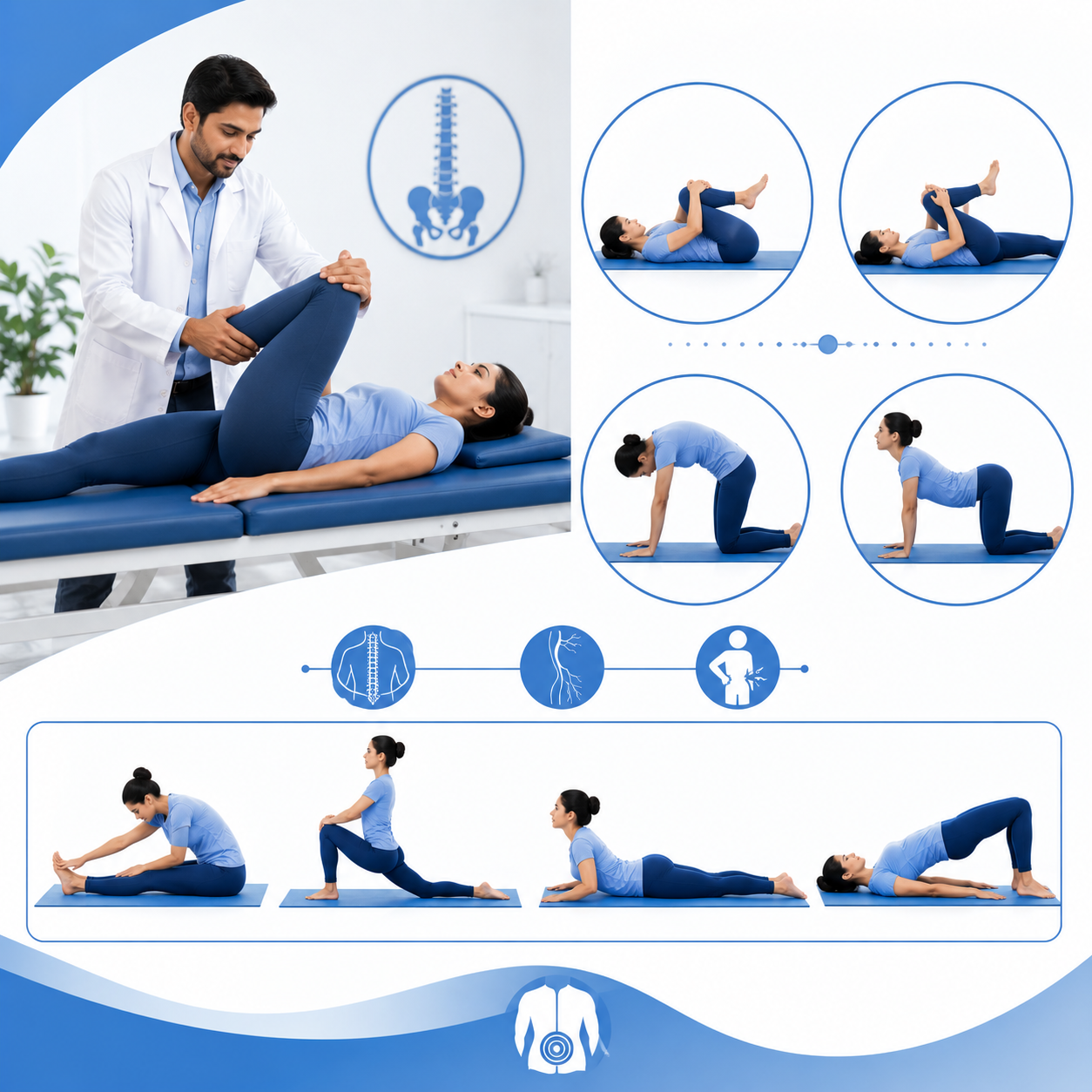
Sciatica exercises and stretches are often the first thing people search for the moment that familiar burning sensation starts creeping down the leg again. And it makes sense — when you’re dealing with sciatic nerve pain, the last thing you want to hear is “just rest and wait.” Movement, done the right way, is often exactly what the nerve needs.
That said, not all movement helps. The wrong stretch, done at the wrong time or with the wrong intensity, can actually aggravate an already irritated nerve. So this isn’t about pushing through pain — it’s about specific, gentle movements designed to relieve pressure on the sciatic nerve, loosen the muscles around it, and gradually restore mobility. This guide walks through the safest and most effective stretches and exercises for sciatica, how to do them correctly, and — just as importantly — when exercise alone isn’t enough and it’s time to see a specialist.
Why Movement Matters for Sciatic Nerve Pain
Sciatica exercises and stretches It might feel counterintuitive to move when something hurts this much, but staying still for too long often makes sciatica worse, not better. Prolonged inactivity can stiffen the muscles around the spine and increase pressure on the nerve rather than relieving it.
The right kind of sciatica pain management exercises work by:
- Gently stretching tight muscles that may be compressing the nerve
- Improving blood flow to the lower back and leg
- Strengthening core and back muscles that support the spine
- Encouraging better posture, which reduces ongoing nerve irritation
The key word here is gentle. This isn’t about intense workouts — it’s about consistent, controlled movement that respects where your body actually is right now.
Safe Exercises for Sciatica: Getting Started the Right Way
Before trying any new stretch, a few ground rules make a real difference in whether it helps or hurts. Safe exercises for sciatica should always:
- Start slow and stop immediately if pain sharpens or radiates further down the leg
- Be done on a stable, comfortable surface
- Focus on gentle, controlled movement rather than forcing a deeper stretch
- Be paired with steady breathing, not held breath or straining
If a movement causes shooting pain rather than a mild stretch sensation, that’s your body telling you to back off, not push through.
Lower Back Stretches for Sciatica
Lower back stretches for sciatica are usually the first place to start, since much of the nerve irritation stems from tension in this area.
Knee-to-Chest Stretch
Lie on your back with knees bent. Gently pull one knee toward your chest, holding for 20 to 30 seconds, then switch sides. This helps release tension in the lower spine without putting pressure on the nerve.
Seated Spinal Twist
Sit with legs extended, bend one knee and cross it over the opposite leg, then gently twist your torso toward the bent knee. This stretch mobilizes the lower spine and can ease pressure around the nerve root.
Cat-Cow Stretch
On hands and knees, alternate between arching your back upward (cat) and dipping it downward (cow). This classic movement improves spinal flexibility and is often one of the gentlest starting points for sciatica relief.
Piriformis Stretch: A Key Move for Sciatic Relief
The piriformis stretch deserves its own mention because the piriformis muscle, located deep in the buttock, sits close to the sciatic nerve. When this muscle tightens or spasms, it can directly irritate the nerve — a condition often called piriformis syndrome.
To perform it:
- Lie on your back with knees bent
- Cross one ankle over the opposite knee, forming a figure-four shape
- Gently pull the uncrossed leg toward your chest until you feel a stretch in the buttock
- Hold for 20 to 30 seconds, then switch sides
Sciatica exercises and stretches This is one of the most consistently recommended movements for sciatic nerve pain relief, precisely because it targets a muscle so close to the nerve itself.
Exercises for Sciatic Nerve Pain: Building Strength Over Time
Once acute pain settles, gentle strengthening becomes just as important as stretching. Exercises for sciatic nerve pain at this stage often include:
- Bridges — lying on your back with knees bent, lifting the hips slowly to engage the glutes and lower back
- Bird-dog — on hands and knees, extending opposite arm and leg simultaneously to build core stability
- Walking — low-impact and often underrated, regular walking keeps the spine mobile without added strain
Strengthening should always come after the acute flare-up has calmed down, not during the sharpest phase of pain.
Yoga for Sciatica: A Gentle, Structured Option
Yoga for sciatica has grown popular for good reason — many poses naturally combine stretching, strengthening, and controlled breathing in a way that suits nerve pain recovery well.
Helpful poses often include:
- Child’s Pose, for gentle lower back release
- Cobra Pose, to build extension and counteract prolonged sitting
- Reclined Pigeon Pose, which mirrors the piriformis stretch in a more supported position
As with any exercise, a slow, guided approach works better than an intense studio class, especially in the early stages of sciatica recovery.
Sciatica Stretches for Beginners: Starting Slow
If none of this is familiar territory, sciatica stretches for beginners should focus on just two or three gentle movements at a time rather than a full routine. Start with the knee-to-chest stretch and piriformis stretch, hold each for a shorter duration initially, and gradually build up frequency and hold time as comfort improves.
Consistency matters more than intensity here. Five gentle minutes done daily will usually outperform one long, aggressive session done occasionally.
Sciatica Relief at Home: Building a Simple Routine
For sciatica relief at home, a simple daily structure works better than randomly trying different stretches. A basic routine might look like:
- Five minutes of gentle walking to warm up
- Knee-to-chest stretch, both sides
- Piriformis stretch, both sides
- Cat-cow stretch, several slow repetitions
- A few minutes of rest in a comfortable position
Doing this consistently, once or twice a day, tends to produce better results than sporadic effort.
When Exercise Isn’t Enough: The Role of Physical Therapy
Sometimes home stretches help manage symptoms but don’t fully resolve the underlying issue. This is where physical therapy for sciatica comes in — a structured, professionally guided program tailored to the specific cause of nerve compression, whether that’s a disc issue, muscle imbalance, or postural problem.
A physical therapist or specialist can also identify if certain movements are actually making things worse, something that’s hard to catch on your own without professional assessment.
When to Stop and See a Specialist
Exercise helps many people manage sciatica, but it isn’t a substitute for proper diagnosis, especially if:
- Pain persists or worsens despite consistent stretching
- Numbness or weakness in the leg is getting more noticeable
- Pain interferes with sleep or daily activities for more than a week or two
- Any stretch consistently triggers sharp, shooting pain rather than relief
At that point, it’s worth getting an actual diagnosis rather than continuing to guess. Edamanasserry Spine Hospital’s Physiotherapy department works alongside the Spine department to build a treatment plan suited to the actual cause, not just the symptom. You can also explore the hospital’s non-surgical treatment options or start from the home page to learn more about available departments and specialists.
FAQs
How often should I do sciatica stretches? Once or twice daily is generally a good starting point, with consistency mattering more than duration. Stop and reassess if any stretch increases pain rather than easing it.
Can exercise make sciatica worse? Yes, if done incorrectly or too aggressively, especially during an acute flare-up. Gentle, controlled movement is safer than deep or forceful stretching early on.
Is walking good or bad for sciatica? Walking is generally one of the safest low-impact activities for sciatica, helping keep the spine mobile without the strain of higher-impact exercise.
How long until stretches start helping with sciatic nerve pain relief? Many people notice some improvement within one to two weeks of consistent, gentle stretching, though this varies depending on the underlying cause.
Should I see a doctor before starting sciatica exercises? If symptoms are severe, worsening, or include numbness and weakness, yes — a proper diagnosis first helps ensure the exercises actually target the right issue.
Want a personalized exercise and treatment plan for your sciatica?
Phone: +91 90870 15559 Address: Edamanasserry Spine Hospital, 129/1, Mettupalayam Road, Narasimhanaickenpalayam, Coimbatore 641031, Tamil Nadu