


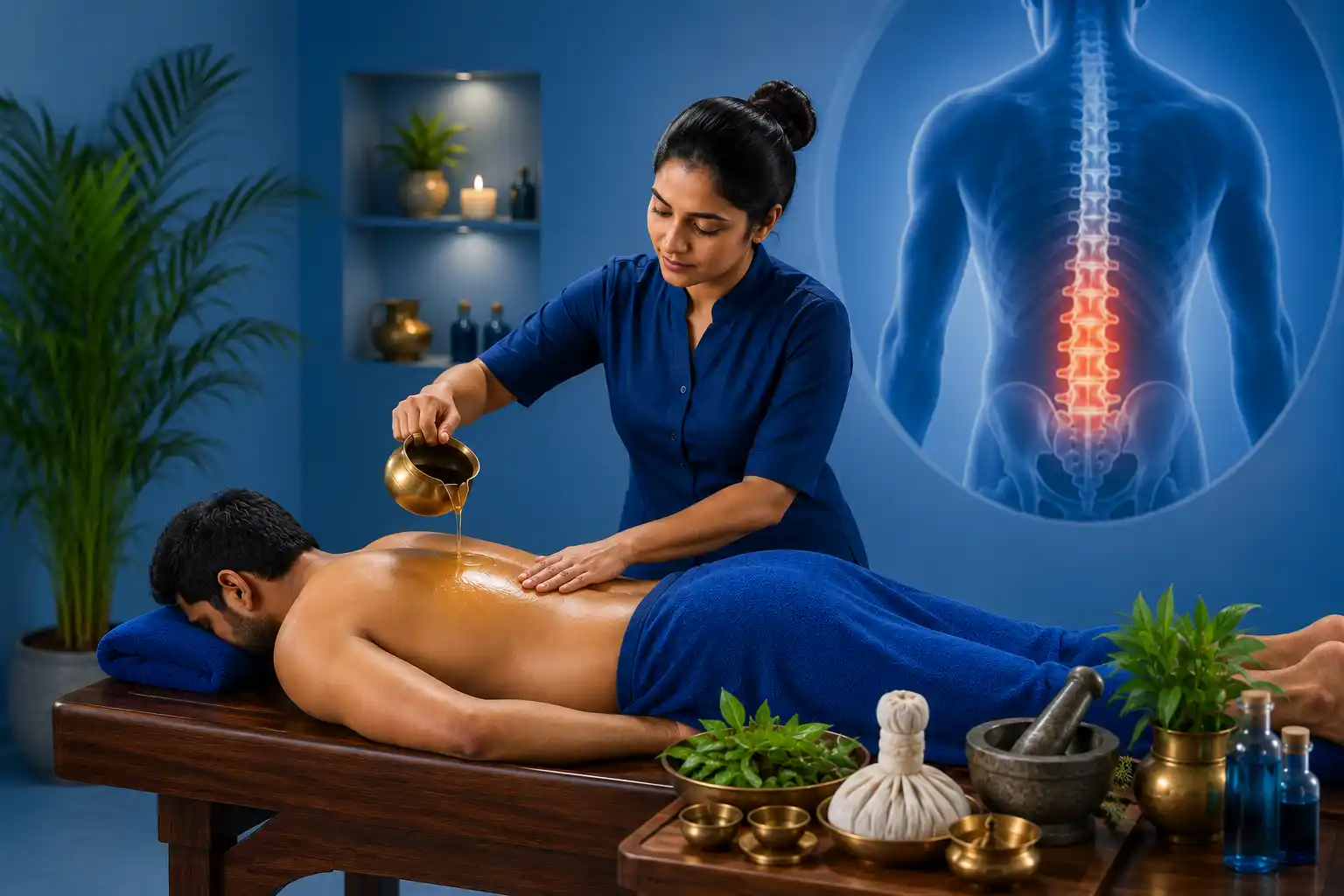
Waking up stiff, struggling to bend, and feeling that dull ache settle into your lower back with age — these are signs many people simply accept as “getting older.” But Ayurvedic Treatment for Lumbar Spondylosis offers a genuine, time-tested path toward relief that goes beyond just managing symptoms.
Lumbar spondylosis, the gradual degeneration of the lower spine’s discs and joints, affects millions of people worldwide, particularly those with sedentary lifestyles or advancing age. While conventional medicine often reaches for painkillers or surgery, Ayurveda addresses the condition through a completely different, whole-body lens.
This guide explores exactly how Ayurvedic treatment approaches lumbar spondylosis and lower back stiffness, what therapies are involved, and how they compare to conventional treatment options.
Understanding Lumbar Spondylosis Before Exploring Treatment
Lumbar spondylosis refers to age-related wear and degeneration of the discs, joints, and vertebrae in the lower spine. Over time, this can lead to reduced flexibility, chronic stiffness, and nerve compression causing pain that radiates into the hips or legs.
Unlike acute injuries, spondylosis develops gradually, which is exactly why lumbar spondylosis symptoms and Ayurveda approaches emphasize long-term, root-cause treatment rather than quick symptom suppression alone.
Why Ayurveda Approaches Spondylosis Differently
In Ayurvedic understanding, lumbar spondylosis is primarily viewed as a Vata imbalance — Vata being the bodily principle governing movement, dryness, and degeneration. When Vata accumulates excessively in the lower spine, it manifests as stiffness, reduced lubrication in the joints, and chronic discomfort.
This framework shapes the entire approach to Ayurvedic treatment for lower back stiffness, focusing on restoring balance through oil therapies, herbal formulations, and lifestyle adjustments rather than simply masking pain signals.
For a broader understanding of how this fits into spine care generally, our Ayurvedic spine treatment program in Coimbatore details our comprehensive approach across various spine conditions.
Lumbar Spondylosis Natural Treatment: The Core Ayurvedic Toolkit
Understanding the lumbar spondylosis natural treatment approach requires familiarity with the specific therapies Ayurveda employs for spinal degeneration.
Primary Treatment Modalities
- Panchakarma detoxification — cleansing therapies to reduce accumulated Vata
- Medicated oil therapies — nourishing and lubricating affected joints and tissues
- Herbal internal medicines — supporting tissue repair and inflammation reduction
- Therapeutic yoga and movement — restoring flexibility and strength gradually
- Dietary adjustments — supporting overall Vata balance through nutrition
These approaches work together rather than in isolation, since Ayurveda treats the body as an interconnected system rather than addressing the spine as a separate mechanical structure.
Panchakarma for Lumbar Spondylosis: Deep Detoxification Therapy
Panchakarma for lumbar spondylosis represents Ayurveda’s most comprehensive detoxification protocol, specifically adapted for spinal conditions.
Key Panchakarma Therapies for Spine Conditions
- Vasti (medicated enema therapy) — considered the primary treatment for Vata disorders, including spinal degeneration
- Snehana (oleation therapy) — full-body oil application to soften and prepare tissues
- Swedana (sudation therapy) — herbal steam treatment to open channels and reduce stiffness
A complete Panchakarma protocol for spondylosis typically spans several weeks, allowing the body to gradually detoxify while therapies work cumulatively rather than in isolation.
Kati Basti for Back Pain: A Signature Ayurvedic Therapy
Among all Ayurvedic treatments, Kati Basti for back pain stands out as one of the most specifically targeted therapies for lumbar conditions.
How Kati Basti Works
- A dam-like structure made of black gram dough is placed around the lower back
- Warm medicated oil is poured into this enclosure and allowed to remain for a set duration
- The oil’s warmth and herbal properties penetrate deeply into the affected area
- This directly nourishes spinal tissues, reduces stiffness, and eases nerve compression discomfort
Patients often report noticeable relief in stiffness and mobility after just a few sessions, though a complete course is typically recommended for lasting results.
Ayurvedic Remedies for Spine Pain: Beyond Kati Basti
Beyond Kati Basti, several other Ayurvedic remedies for spine pain play important supporting roles in comprehensive treatment.
Additional Spine-Focused Therapies
- Pizhichil — continuous warm oil pouring combined with gentle massage, nourishing deeper tissues
- Njavara Kizhi — medicated rice bolus massage, particularly beneficial for muscle strengthening
- Abhyanga — full-body therapeutic massage improving overall circulation and Vata balance
These therapies are typically combined based on individual assessment, since Ayurvedic treatment plans are personalized rather than standardized across all patients.
Ayurvedic Oil Massage for Back Pain: The Foundation of Treatment
Central to almost every Ayurvedic protocol, Ayurvedic oil massage for back pain provides both immediate relief and long-term therapeutic benefit.
Why Oil Massage Matters So Much
- Warm medicated oils penetrate deep into muscle and joint tissue
- Specific herbal oil formulations target inflammation and Vata imbalance directly
- Regular massage improves circulation, reducing stiffness over time
- The therapeutic touch itself provides genuine muscular relaxation
Commonly used oils include those infused with herbs like Bala, Ashwagandha, and Guggulu, chosen specifically for their anti-inflammatory and tissue-nourishing properties.
Herbal Treatment for Spine Stiffness: Internal Support
Alongside external therapies, herbal treatment for spine stiffness addresses the condition from within through carefully selected internal medicines.
Common Herbal Approaches
- Formulations supporting joint lubrication and reduced inflammation
- Herbs traditionally used to support bone and cartilage health
- Digestive-supporting herbs, since Ayurveda considers strong digestion essential to reducing toxin accumulation
These internal medicines are always prescribed based on individual constitution and specific symptom presentation — never as generic, one-size-fits-all formulations.
Ayurvedic Diet for Spondylosis: Supporting Recovery From Within
Diet plays a genuinely significant role in Ayurvedic diet for spondylosis management, since food directly influences Vata balance according to Ayurvedic principles.
General Dietary Principles
- Favor warm, cooked, and easily digestible foods over cold or raw options
- Include healthy fats (ghee, sesame oil) which help counter Vata’s dry, rough qualities
- Reduce excessive caffeine and processed foods, which can aggravate Vata imbalance
- Maintain regular meal timing to support consistent digestion
A qualified Ayurvedic physician will typically customize dietary recommendations based on your specific constitution and symptom pattern, rather than applying generic advice.
Yoga and Ayurveda for Lower Back Pain: Restoring Movement Safely
Complementing internal and external therapies, yoga and Ayurveda for lower back pain work together to gradually restore flexibility and strength.
Gentle Yoga Practices Often Recommended
- Cat-cow stretches for gentle spinal mobility
- Gentle seated forward folds, performed within comfortable range
- Supported bridge poses to strengthen lower back muscles gradually
- Breathing practices (pranayama) supporting overall relaxation and stress reduction
Yoga practices should always be introduced gradually and ideally under guidance, particularly for patients with significant existing stiffness or nerve involvement.
Spondylosis Treatment Without Surgery: A Realistic Path Forward
For many patients, spondylosis treatment without surgery through Ayurveda offers a genuinely viable long-term path, particularly for moderate cases without severe neurological complications.
When Non-Surgical Treatment Works Well
- Early to moderate stiffness without significant nerve compression
- Patients willing to commit to a structured, multi-week treatment protocol
- Cases where conventional treatment has provided only temporary relief
When to Still Consult Conventional Medicine
- Progressive weakness or numbness in the legs
- Loss of bladder or bowel control (a medical emergency requiring immediate attention)
- Severe, unrelenting pain unresponsive to any conservative treatment
Most specialists, including experienced Ayurvedic practitioners, recommend a thorough diagnostic evaluation before beginning any treatment protocol, ensuring the approach genuinely matches the severity of your specific condition.
Ayurvedic Treatment for Spondylosis Kerala: A Tradition Rooted in Heritage
Kerala’s Ayurvedic tradition, which forms the foundation of Ayurvedic treatment for spondylosis Kerala practitioners follow, represents centuries of refined therapeutic knowledge specifically suited to musculoskeletal conditions.
This heritage emphasizes personalized diagnosis, therapeutic touch, and herbal formulations passed down through generations of practicing families — an approach our own hospital profile reflects, built on treatment protocols developed and refined by the Edamanasserry family over generations.
Lower Back Stiffness Home Remedies Ayurveda: What You Can Do Between Sessions
Beyond clinical treatment, certain lower back stiffness home remedies Ayurveda principles support ongoing management between formal therapy sessions.
Simple Supportive Practices
- Apply warm sesame oil to the lower back before bathing, allowing brief absorption time
- Maintain consistent, gentle movement throughout the day rather than prolonged sitting
- Keep the lower back warm, especially in cooler weather or air-conditioned environments
- Practice gentle stretching upon waking, before stiffness sets in fully
These home practices support, but don’t replace, professional Ayurvedic treatment for genuine spondylosis management.
Ayurvedic Doctor for Lumbar Spondylosis: What to Look For
Choosing the right Ayurvedic doctor for lumbar spondylosis care significantly affects treatment outcomes, since personalized diagnosis is central to authentic Ayurvedic practice.
Questions to Ask Before Beginning Treatment
- What specific Panchakarma therapies do you recommend for my condition, and why?
- How is my individual constitution (Prakriti) factored into the treatment plan?
- What realistic timeline should I expect for noticeable improvement?
- Are you certified and experienced specifically in spine-related conditions?
A qualified practitioner will explain their reasoning clearly and personalize your treatment plan rather than offering a generic, standardized protocol.
Best Ayurvedic Hospital for Spondylosis: What Sets Quality Care Apart
When evaluating the best Ayurvedic hospital for spondylosis care, certain factors distinguish genuinely qualified facilities from less rigorous alternatives.
What to Verify
- ISO certification and Ayush Ministry approval
- Experienced, qualified Ayurvedic physicians with documented specialization in spine conditions
- Transparent explanation of treatment protocols and expected timelines
- Integration of diagnostic evaluation alongside traditional treatment approaches
Our general medicine and back pain treatment services reflect this comprehensive, personalized approach to spine and musculoskeletal care.
Frequently Asked Questions
1. How long does Ayurvedic treatment for lumbar spondylosis typically take to show results?
Most patients notice improvement in stiffness and mobility within 3-6 weeks of consistent treatment, though complete protocols often extend several weeks for lasting results.
2. Is Ayurvedic treatment effective for severe spondylosis, or only mild cases?
Ayurveda can be effective for mild to moderate cases; severe cases involving significant nerve compression or neurological symptoms should first be evaluated by a specialist to rule out conditions requiring urgent conventional intervention.
3. Can Ayurvedic treatment be combined with conventional physiotherapy?
Yes, many patients successfully combine Ayurvedic therapies with physiotherapy, though it’s best to inform both practitioners about your complete treatment plan for coordinated care.
4. What is Kati Basti, and how many sessions are typically needed?
Kati Basti is a therapy where warm medicated oil is retained over the lower back using a dough enclosure; most protocols recommend 7-14 sessions depending on symptom severity.
5. Are there any risks associated with Ayurvedic treatment for spondylosis?
When performed by qualified practitioners using appropriate herbal formulations, Ayurvedic treatment is generally safe; always disclose your complete medical history and any existing conditions before beginning treatment.
Final Thoughts
Ayurvedic treatment for lumbar spondylosis offers a genuinely holistic path toward lasting relief — addressing not just the stiffness itself, but the underlying imbalance driving it. With personalized therapies like Kati Basti, Panchakarma, and herbal support, many patients find meaningful, sustainable improvement without surgical intervention.
Ready to explore Ayurvedic relief for lumbar spondylosis? Visit the E-Spine Hospital to learn more about our Ayurvedic treatment programs, or book a consultation with our specialists today.