


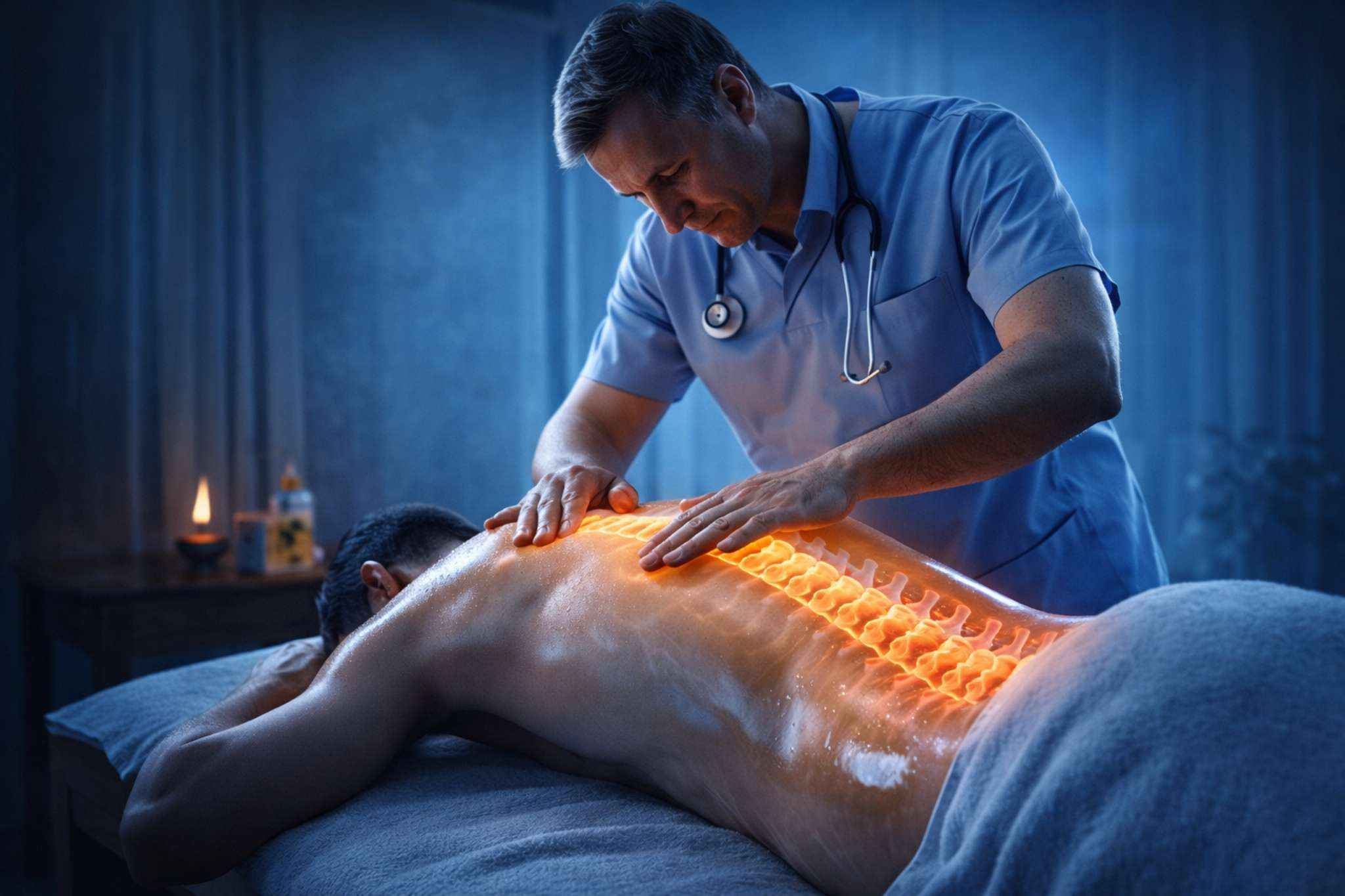
What Happens to Your Spine During Abhyangam? A Deep Dive Into the Neuromuscular Benefits is a question increasingly asked by individuals seeking natural, evidence-informed wellness solutions. Rooted in the ancient healing science of Ayurveda, Abhyangam is a therapeutic oil massage designed to nourish tissues, calm the nervous system, and restore balance.
For both domestic audiences familiar with traditional therapies and international readers exploring integrative medicine, understanding how this practice influences spinal function provides valuable insight into its clinical relevance.
Understanding Abhyangam in Ayurvedic Medicine
In Ayurveda, Abhyangam is more than relaxation therapy. It is a structured, rhythmical oil massage performed using warm herbal oils selected according to an individual’s constitution (Dosha).
From a modern anatomical perspective, the spine houses and protects the spinal cord — a critical component of the central nervous system. Therefore, any therapy influencing spinal muscles, fascia, and neural pathways has broader systemic effects.
This is where Abhyangam neuromuscular benefits become clinically interesting.
The Spine: A Neuromuscular Highway
The human spine is composed of:
- 33 vertebrae
- Intervertebral discs
- Ligaments and connective tissue
- Deep and superficial paraspinal muscles
- Nerve roots branching from the spinal cord
Tension, poor posture, stress, and sedentary lifestyles can cause muscular guarding and restricted circulation around this region. Over time, this impacts mobility, nerve signaling, and overall spinal alignment.
Understanding Spine health during Abhyangam massage requires examining how therapeutic touch interacts with these structures.
What Physiologically Happens to the Spine During Abhyangam?
1. Muscle Relaxation and Reduced Guarding
Abhyangam uses consistent, downward strokes and circular motions along the paraspinal muscles. Warm medicated oils penetrate superficially and create a soothing thermal effect.
This combination helps:
- Reduce muscle stiffness
- Improve tissue elasticity
- Decrease involuntary muscle guarding
When paraspinal muscles relax, pressure on spinal joints and nerve roots is reduced, contributing to improved spinal mobility.
These responses form part of the documented Abhyangam neuromuscular benefits.
2. Enhanced Blood Circulation
Massage increases microcirculation in soft tissues. Improved blood flow around spinal muscles and ligaments:
- Delivers oxygen and nutrients
- Removes metabolic waste
- Supports tissue repair
For individuals experiencing chronic back discomfort, better circulation supports long-term Spine health during Abhyangam massage.
3. Fascia Hydration and Tissue Glide
The spine is surrounded by layers of fascia — connective tissue that links muscles, nerves, and joints. Stress and inactivity can cause fascial tightness.
Abhyangam improves fascial hydration through oil application and rhythmic pressure. This enhances tissue glide and reduces stiffness, supporting better spinal movement patterns.
4. Nervous System Regulation
The spinal cord transmits signals between the brain and the body. Gentle therapeutic touch activates the parasympathetic nervous system — often referred to as the “rest and repair” state.
This results in:
- Reduced stress hormone levels
- Slower heart rate
- Lower muscle tension
- Improved neural communication
These mechanisms explain many Abhyangam neuromuscular benefits, particularly for individuals experiencing stress-related back pain.
5. Postural Awareness and Alignment Support
While Abhyangam is not a structural manipulation therapy like chiropractic care, it indirectly supports posture by:
- Releasing tight muscles
- Improving proprioception (body awareness)
- Encouraging balanced muscle engagement
Improved posture reduces uneven spinal loading, contributing to sustained Spine health during Abhyangam massage.
Clinical and Preventive Applications
For Sedentary Professionals
Extended sitting places strain on the lumbar and cervical spine. Regular Abhyangam sessions may help relieve tension and prevent stiffness.
For Athletes
Muscle recovery, reduced inflammation, and improved circulation enhance spinal resilience under physical stress.
For Older Adults
Aging often reduces tissue elasticity and joint mobility. Abhyangam may support flexibility and comfort when administered under professional supervision.
Domestic and International Relevance
In countries like India, Abhyangam is a well-established part of traditional wellness routines. Internationally, it is gaining attention within integrative and complementary medicine frameworks.
Globally, healthcare systems increasingly recognize the importance of:
- Non-invasive therapies
- Stress reduction techniques
- Preventive musculoskeletal care
By combining traditional wisdom with modern anatomical understanding, the conversation around What Happens to Your Spine During Abhyangam? A Deep Dive Into the Neuromuscular Benefits becomes universally relevant.
Safety and Professional Guidance
Although generally safe, Abhyangam should be performed by trained practitioners, especially in cases involving:
- Severe spinal injuries
- Acute disc prolapse
- Advanced osteoporosis
- Recent surgery
A professional assessment ensures the therapy is tailored to individual health conditions.
E-E-A-T Perspective: Why Expertise Matters
When exploring What Happens to Your Spine During Abhyangam? A Deep Dive Into the Neuromuscular Benefits, credible sources and qualified practitioners are essential.
Trustworthy Ayurvedic clinics typically demonstrate:
- Certified therapists
- Personalized Dosha assessment
- Transparent treatment protocols
- Hygiene and safety standards
For international readers, verifying practitioner credentials strengthens confidence in treatment outcomes.
Conclusion
What Happens to Your Spine During Abhyangam? A Deep Dive Into the Neuromuscular Benefits reveals that this ancient Ayurvedic therapy influences far more than surface-level relaxation. Through muscle relaxation, improved circulation, fascial hydration, and nervous system regulation, Abhyangam supports spinal comfort and functional balance.Whether you are a domestic patient familiar with Ayurvedic traditions or an international reader exploring holistic healthcare, understanding the science behind Abhyangam neuromuscular benefits and Spine health during Abhyangam massage provides a clearer pathway toward integrative spinal wellness.